Alex Honnold Talks Action Suits, His “Work Costume,” and Adventuring with His Family
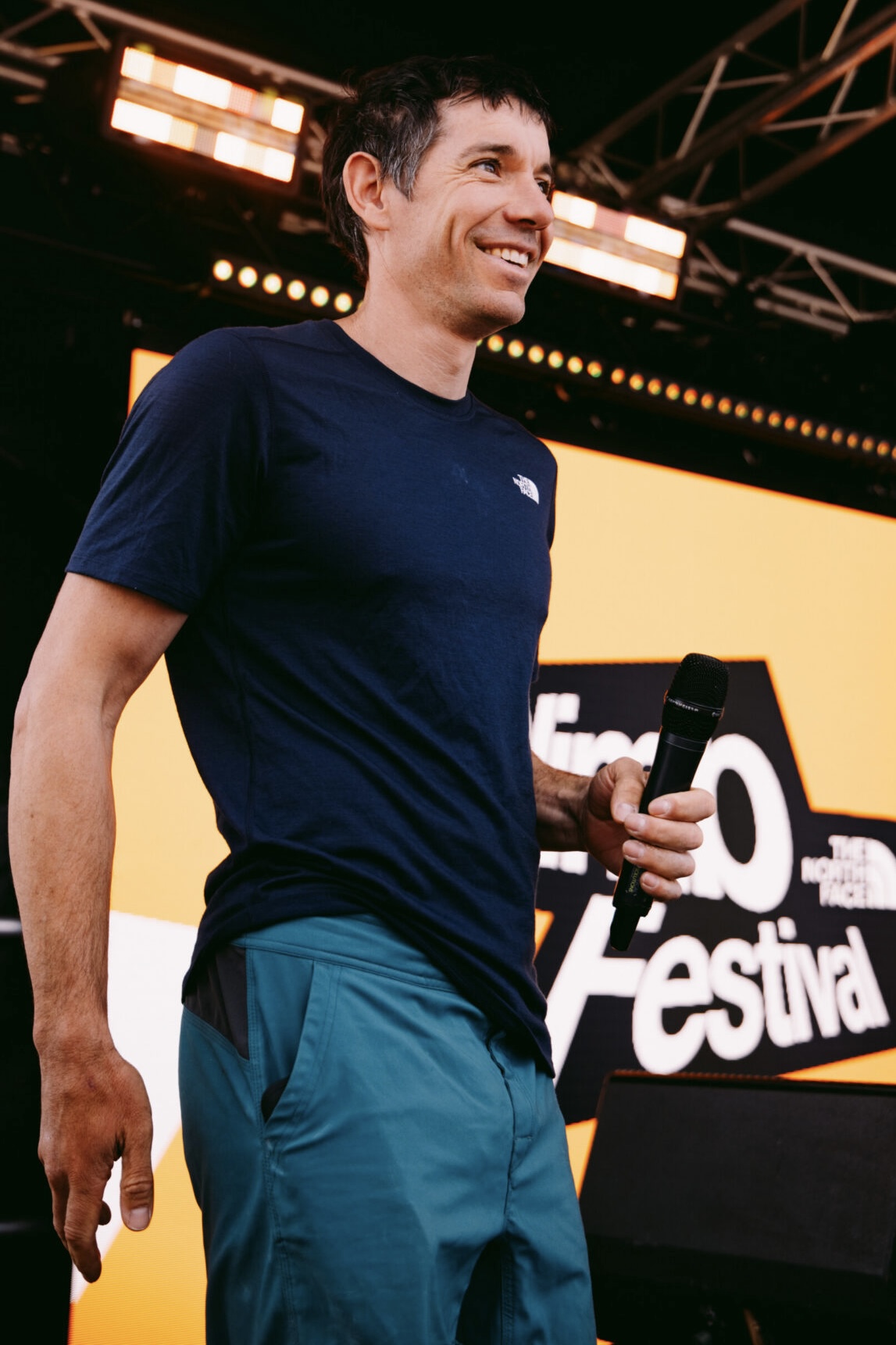
We spoke to the world’s most famous climber about getting dressed at The North Face Climb Fest
When I ask Alex Honnold about gorpcore, his face scrunches up: “What is that, like backpacker chic?” I’m visibly surprised; I know for a fact that somebody explained the trend to him at this very event, The North Face Climb Fest, last year. It seems that the mechanism in his mind responsible for assessing information as valuable or otherwise immediately sent this down the trash chute into his mental garbage bin, only to be unearthed by me exactly one calendar year later.
Honnold is the most famous climber in the world, largely because of his propensity for free soloing: climbing without a rope. In 2017, he free soloed the Freerider route of the monstrous El Capitan, a feat so spectacular that its worship easily escaped the containment of climbing circles. One glance at the sheer magnitude of the wall is enough to elicit an expletive from even those entirely uninitiated to the climbing world. When I manage to explain gorpcore and its prevalence in fashion to Honnold enough to ask how he feels about it, he replies simply: “Totally indifferent to it. That stuff just comes and goes, and I’ll still be wearing my pajamas.”
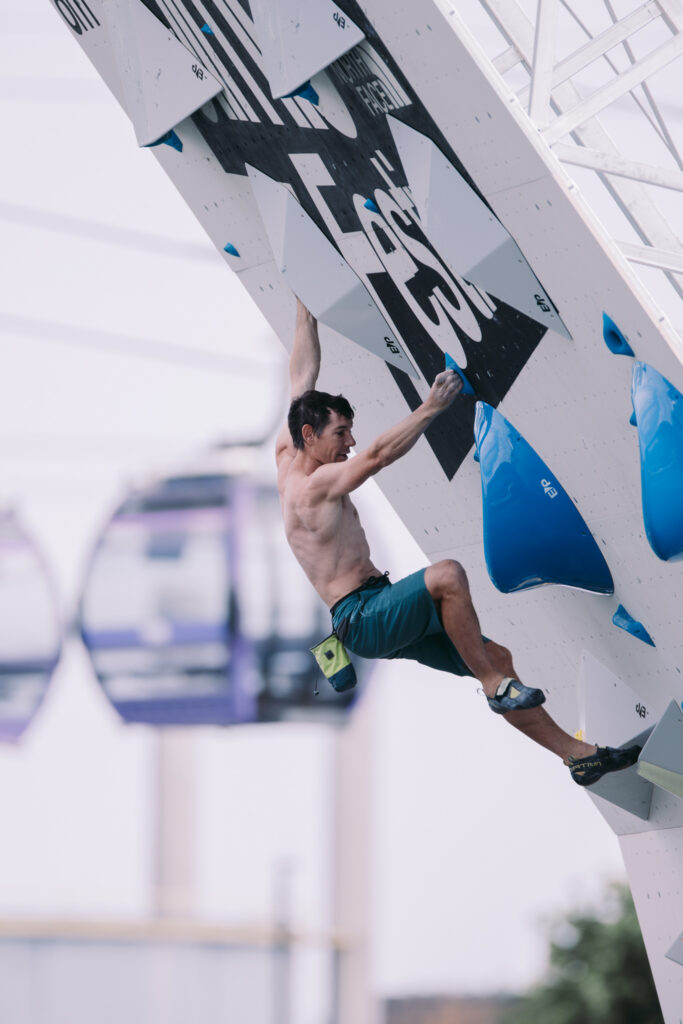
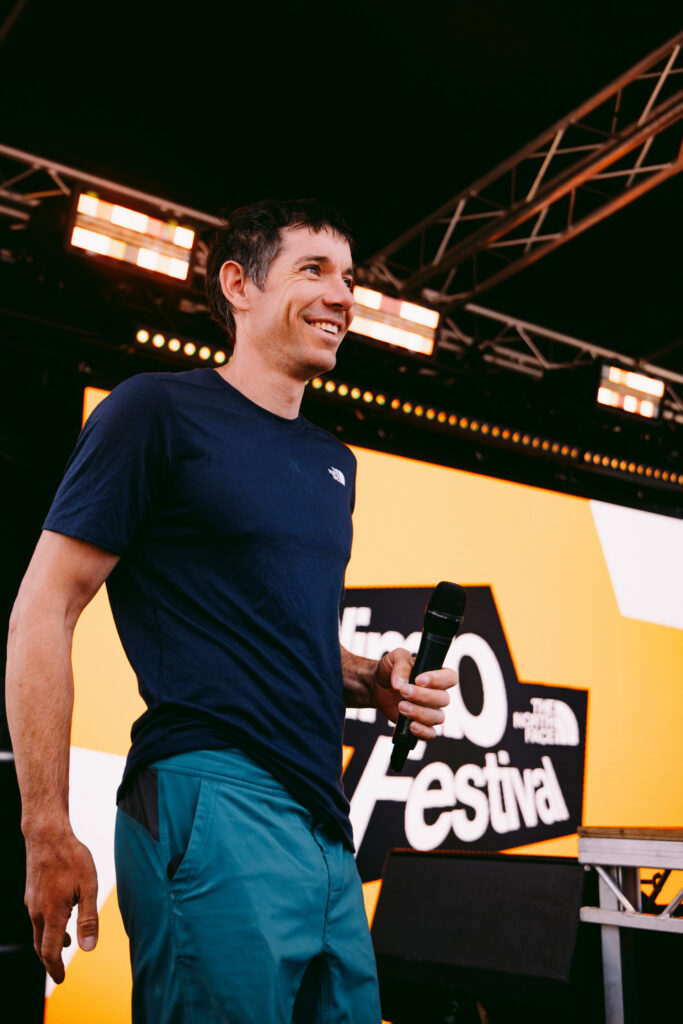
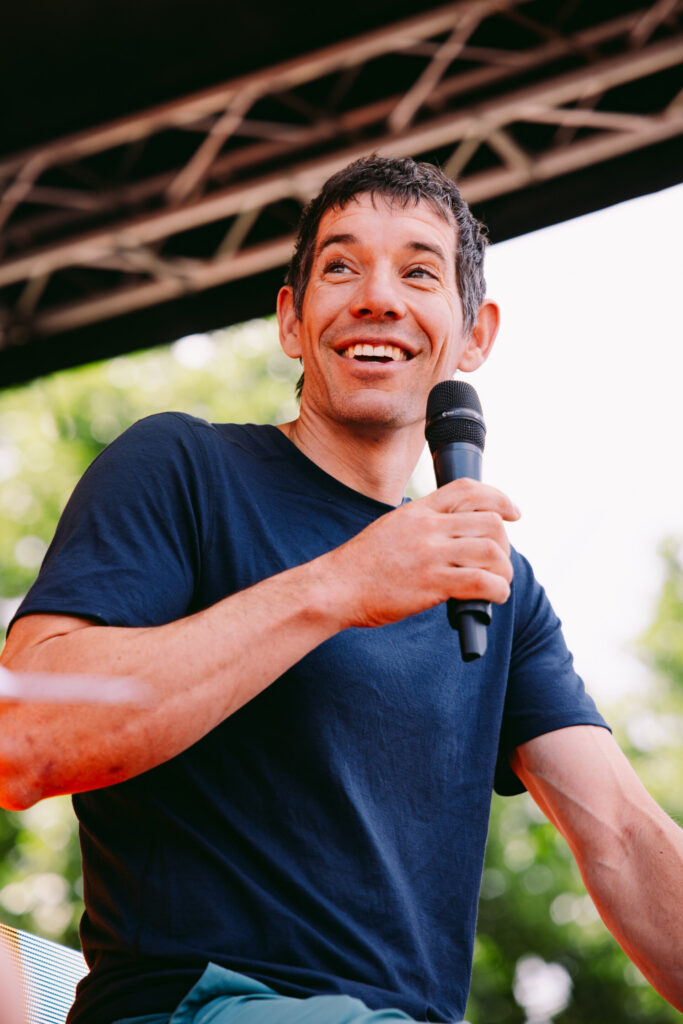
Courtesy of The North Face
Most non-climbers best know Honnold for Free Solo, the Academy Award-winning documentary that chronicled his aforementioned ascent, deemed “one of the great athletic feats of any kind, ever” by The New York Times. The documentary, in one scene depicting an MRI scan of Honnold’s brain, effectively purports that he doesn’t feel fear, contributing to a portrayal of the now 40-year-old father as a climbing savant who owes his prowess to an innate ability to—like some sort of superhuman—detach his eyeballs from fear processing in a Cronenbergian process of self-preservation.
This portrayal, Honnold says, is misleading. He does not have an inherited predisposition to overcoming fear. He simply has been in scary situations a lot. “The main, quote-unquote practice [for overcoming fear] is just practice,” he says, casually. As I prod, he reveals a more intentional approach of compartmentalization. “[Experiencing fear] shouldn’t be that dissimilar to experiencing hunger, experiencing sleepiness. The average person is just not experiencing visceral fear that often, and so it typically feels overwhelming,” he says, elaborating: “People experience hunger probably once a day. So they’re pretty used to it, and they set that aside. And so, if you’re experiencing fear that often, you just learn the same way.”
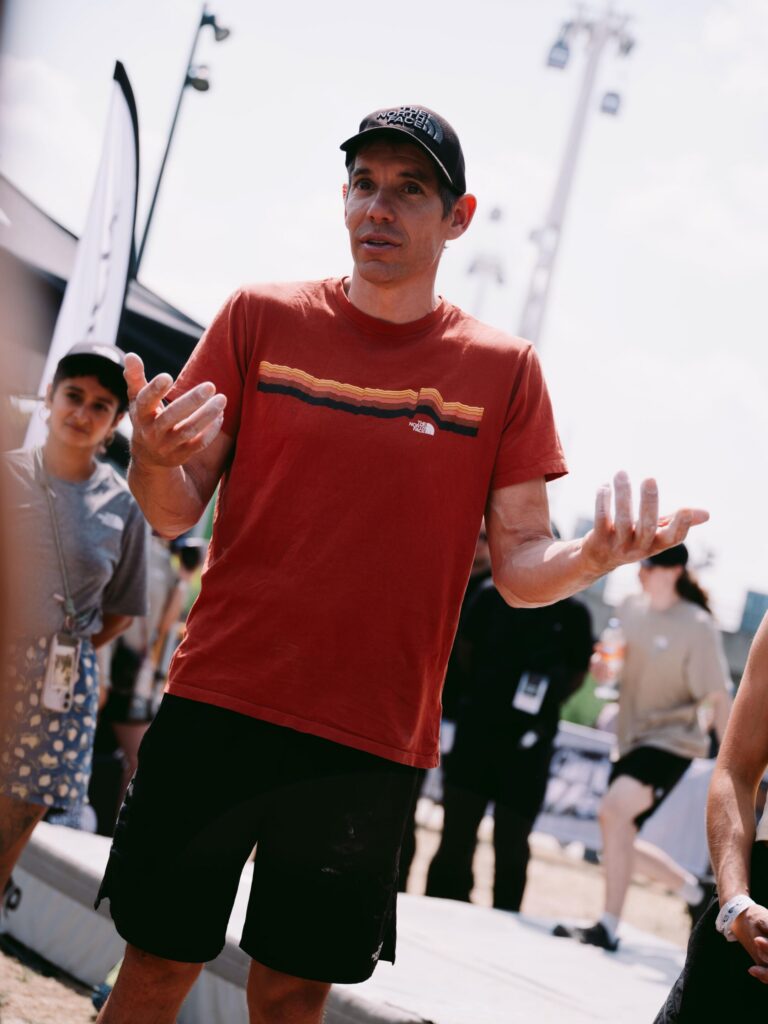
I’m here in London at the North Face Climb Fest to speak about fashion with “the least fashionable person in the whole world,” in his words. Honnold’s approach to getting dressed revolves around practicality and stability. His consistency is so steadfast that he is able to identify phases of his life by shirt alone. “When I see interviews, I can basically judge the eras of my life by what I’m wearing.” The fashion journalist Avery Trufelman, in her podcast Articles of Interest, describes fashion as “both the externalization of your internal state and the individualization of the collective state, […] the most obvious barometer of time made visible.” Honnold, chuckling, describes fashion as “just wearing the same stuff.”
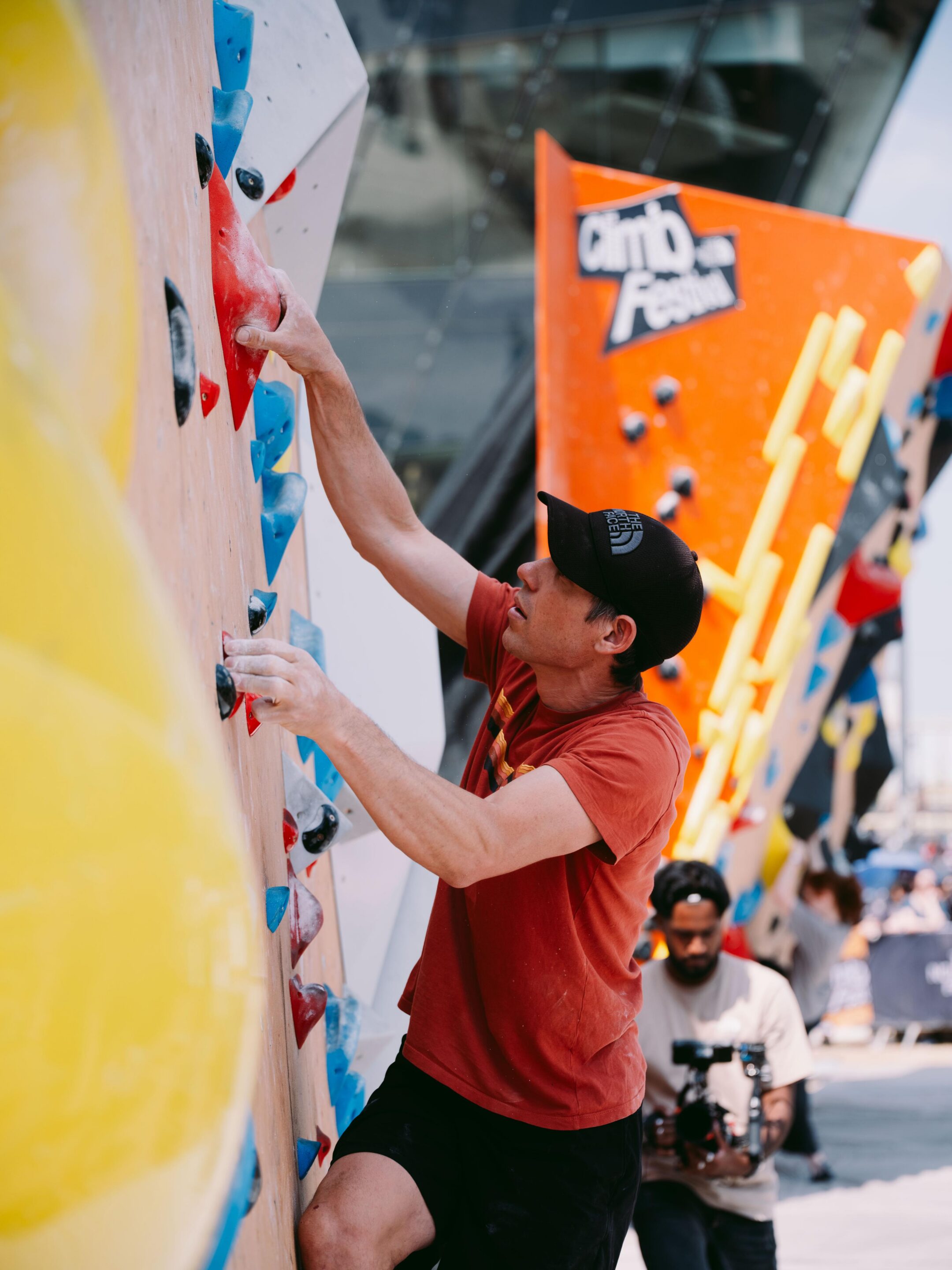
A Honnold-owned garment has the privilege of embarking on one of the most illustrious life cycles available to the humble tee shirt. First, a crisp top can be used for media appearances—or, if it is soft enough, climbing. “I wear the same black polo for every public thing I do now; it does kind of remind me of the stuff you read about Steve Jobs only wearing the same black turtleneck; it does just remove decisions. You want to at least convey some proper decorum, but then you know you don’t have to think about it every time. You just put on your work costume.”
Somewhere along the way, the shirt might participate in one of the most jaw-dropping feats ever performed by a human being, before its life cycle concludes as sleeping attire for his wife Sanni. “My wife’s been wearing this pajama shirt that used to be my favorite shirt, and now it’s just this tattered, soft thing that she likes to wear to bed,” he smiles, “It’s nice.” As we talk, he’s thumbing the tattered shirt he wore on the flight to London, holes across his chest, mirages of climbs past.
Courtesy of The North Face
Despite Honnold’s initial dismissal of his fashion affinity, later in our conversation, he perks up again, “One more random thought about fashion: Mark Twight, a climbing author, wrote about the idea of an action suit. When you’re doing alpinism, actual extreme mountain climbing type stuff, it’s nice to just have your action suit, basically the same set of layers that you always wear, and it is kind of like a superhero getting into your costume. And you’re like, ‘okay, it’s time to do some shit.’”
Earlier this year, Honnold free soloed Taipei 10, the 11th tallest building in the world. The ascent was the subject of a Netflix special, but Honnold says it was just something he personally wanted to do, and “Netflix [is] the only way to get permission to climb a building like that.” I ask him if his interest in the spectacle of ultra-high-risk climbing will taper off as he ages, and while he says he’ll continue to free solo, he’ll set his sights on less lofty heights—literally and figuratively. “Right now, climbing for me is still tinged with this whole performance mindset of trying to be a good rock climber. But when I’m just content to be a mediocre rock climber, it’ll be even more fun.”
Honnold’s eyes light up the brightest when discussing three things. First, his interview podcast Planet Visionaries: “I’m naturally a curious person, and so it’s just fun to learn interesting things about the world. Each person is an expert in what they do, so even if it’s not something that I’ve ever even heard of or necessarily care about. By the end of the conversation, it’s like, if they’re into it. I’m into it.” Second, the Honnold Foundation, which he founded in 2012, “basically the first year that I started making more than I needed. I mean, I was living in a van.” The scope of the organization—which focuses on providing environmentally sound solutions to global energy poverty—has changed quite a bit over the years. “Last week, we approved our biggest slate to date. Basically, we’re giving $11 million to projects over the next two years,” he says. And third, the subject that nets a real grin from the climber is his family. As we discuss the future, he reflects on how the early years of parenting have yielded some late nights. “I’m looking forward to my two-year-old going to bed faster,” he laughs, before smiling: “We just had a series of pretty good family adventures over the last couple weeks, going backpacking and family camping, going scrambling, doing fun things together. Basically, the next couple years could be amazing.”
Discover More