Bách Buquen Fronts Latest MAC Cosmetics Line
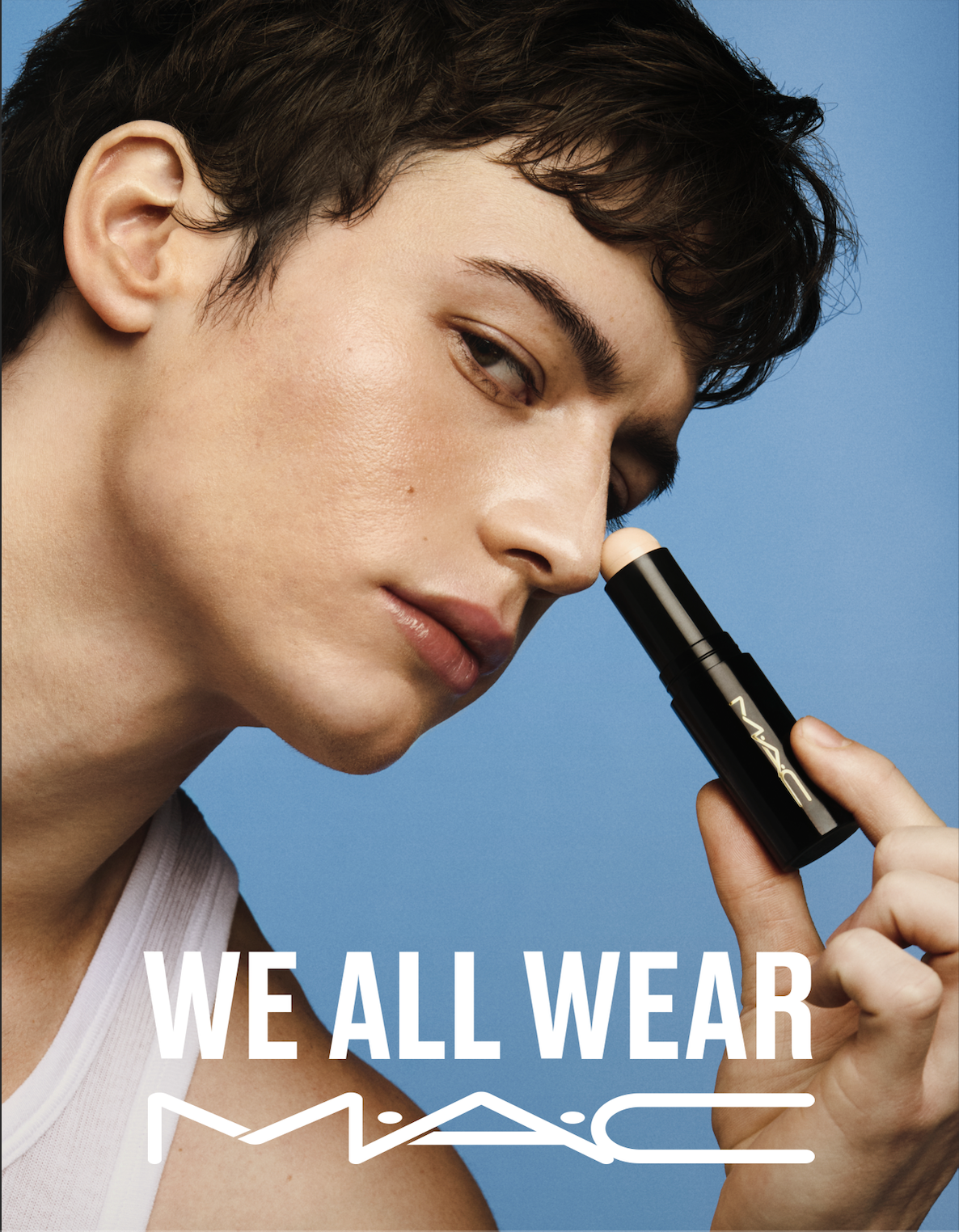
“We All Wear MAC” welcomes a casual approach to beauty
Cosmetics are entering a new age. Who uses makeup, and when they use it, has been a subject of scrutiny since its invention, but that scrutiny is now, once and for all, being pushed aside. Among the figures leading this charge is French model and influencer Bách Buquen, who rose to prominence on social media for his public use of makeup and casual approach to beauty as a man.
Buquen is now the face of MAC Cosmetics’ latest campaign, “We All Wear MAC,” ushering in an era of greater inclusion and diversity in beauty. The campaign signals a broader shift in the industry: away from viewing makeup solely as a tool for transformation and toward seeing it as a natural part of the everyday routine, much like skincare.
V spoke to Buquen about creativity, beauty, and his place in the world of MAC.
V: What brought you to content creation and modeling?
Bach Buquen: My relationship with image and performance started long before social media. I grew up between worlds that might seem quite different from one another — classical ballet, rugby, and sports, but also performances, costumes and stage makeup. I was just as used to expressing myself physically through sports as I was to being on stage, wearing makeup and stepping into a character.
I never really saw those things as contradictory. If anything, they all shaped who I am and even the way I understand masculinity for myself. I also think my generation feels less pressure to fit into one specific box. You can be interested in sports, fashion, makeup, dance or film without one having to define you or cancel out the others.
Social media simply gave me a space where all those sides of me could exist together. Modeling came quite naturally after that, because movement, image and being in front of a camera had already been part of my life for a long time.
V: At first, did wearing makeup make you feel more secure or more insecure?
Buquen: A little bit of both. I developed acne quite young, and at first makeup mostly helped me feel more confident. If I could soften some of the imperfections, I stopped thinking about my skin as much and could just move on with my day. But when you’re young, and you’re a boy wearing makeup, you can also become very aware of how people are looking at you. If someone noticed I was wearing it, if I hadn’t applied it properly, or if it started fading throughout the day, I could suddenly feel self-conscious again.
Over time, my relationship with makeup changed. At first, it was almost a form of protection. Later, it became something much more creative and personal. More than anything, I realized that my masculinity didn’t need to be defined by all the things I refused to let myself do. Wearing makeup has never made me feel less masculine. It just gave me a much freer understanding of what masculinity could look like for me.
V: How do you approach your own creative expression?
BB: I think I’m very instinctive. I notice a lot of things around me, and sometimes something very simple — a song, a place, a certain light, the way someone is dressed — can immediately give me an idea.
I also really like trying new things. I get bored quite quickly if I stay in the same routine, so I’m always curious to discover something I don’t know yet, take a small risk, or put myself in a new situation. A lot of the time, that’s where my ideas come from. Movement is also a big part of the way I express myself because I’ve always danced and done sports. Music can instantly make me picture a movement or even a whole scene.
Visually, I’m quite simple. I like things that feel clean, well-proportioned and effortless, but still have something strong about them. I’m usually drawn to things that have a certain energy or presence, even if I can’t always explain exactly why.
V: How has makeup changed your approach to fashion and beauty?
Buquen: My first relationship with makeup was very connected to performance. In classical ballet, I once played Harlequin, and I remember that as soon as the costume and makeup were on, I already felt different. It naturally changed the way I moved and helped me step into the character.
I still recognize that feeling today before a shoot or a film set. There’s something about the process of getting ready — the clothes, the hair, the makeup — that can completely shift your attitude and your energy.
It also made me understand quite early that fashion and beauty are deeply connected. They work with a lot of the same elements: proportions, colors, textures, lines. You can construct a silhouette in the same way that you can construct a face.
Most importantly, makeup changed the way I think about beauty. I don’t think beauty necessarily has to be about reaching some idea of perfection. I’m much more interested in what makes someone distinctive, and how you can choose to reveal it, enhance it or sometimes completely transform it.
V: Why M·A·C?
BB: I really connect with the way M·A·C approaches makeup as a form of expression rather than a set of rules you’re supposed to follow. What I especially like is the importance the brand places on individuality. Makeup doesn’t have to make everyone move toward the same definition of beauty. It can reveal or highlight what is already there.
That means a lot to me because when a man wears makeup, people can still make assumptions about who he is because of it. I think my generation is becoming much freer about that. To me, working on your complexion or wearing makeup should be able to feel as normal and personal as choosing what you wear or how you style your hair.
M·A·C also holds a very personal place in my career because I shot my first major campaign with the brand. There was something really meaningful about seeing something that had been part of my life since I was young suddenly become part of my work as well.
Ultimately, that’s probably what I love most about makeup: it doesn’t have to turn you into somebody else. Sometimes it simply allows you to express more of who you already are.
V: What was the highlight of your summer?
BB: Honestly, probably having the chance to slow down a little. The months before summer had been very intense, so it was nice to travel, spend time with my friends and enjoy things without constantly thinking about the next project or what I was going to do next.
I’m usually someone who always wants to keep moving, trying something new or thinking ahead, so having that space actually gave me some perspective. It made me think more clearly about what I’ve already done and, more importantly, what I want to do next.
So I don’t think my highlight was one specific moment. It was more about having the freedom to be spontaneous again.
Discover More