Legendary Entertainer Murray Hill Gets Real In His Debut Memoir ‘Showbiz!’
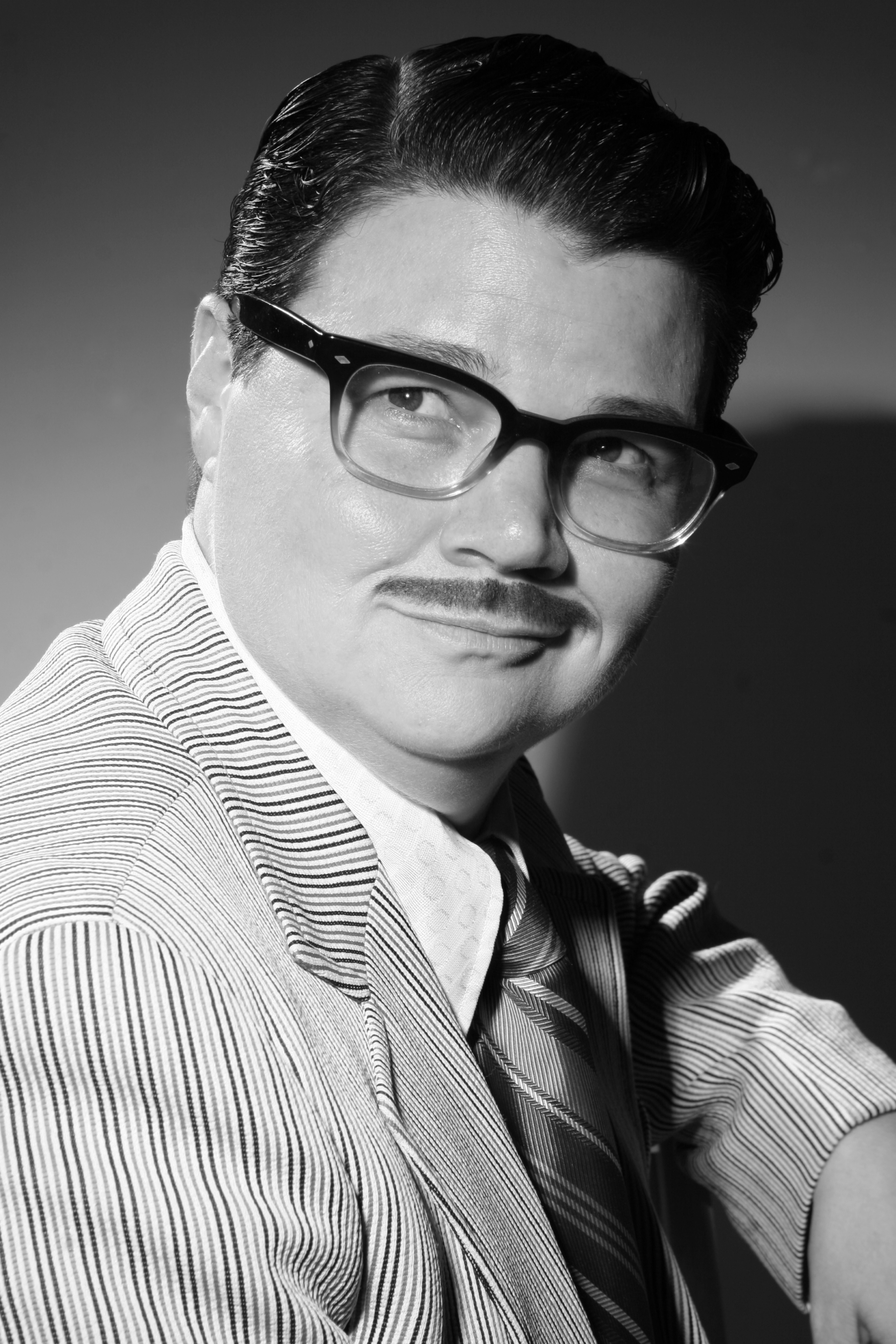
“If I’m just talking about my suit and tap dancing, that doesn’t feel authentic to me.”
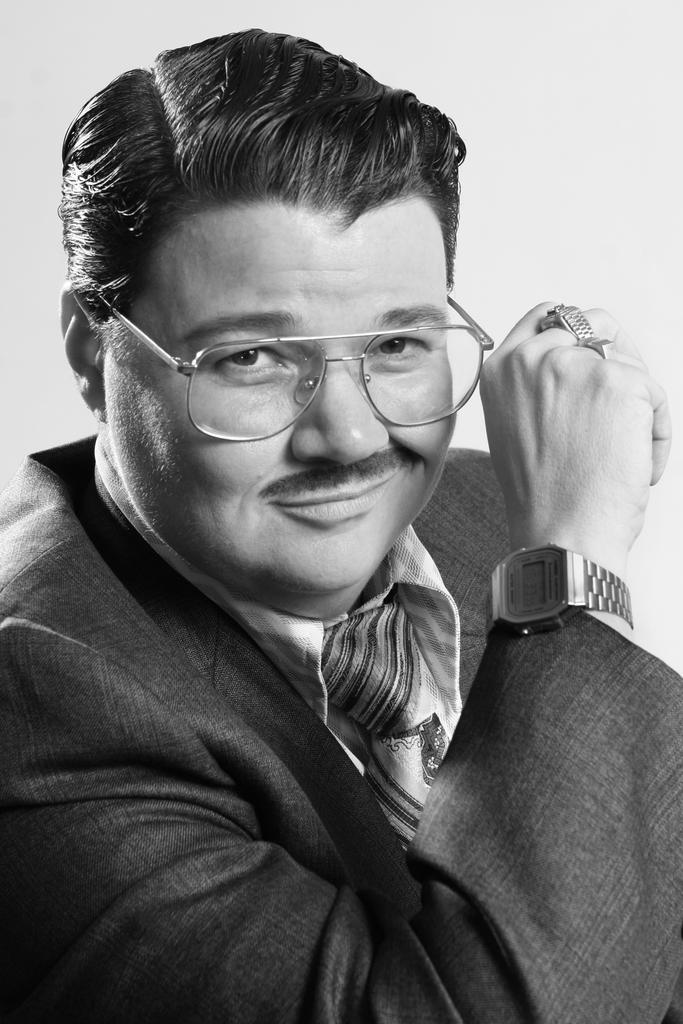
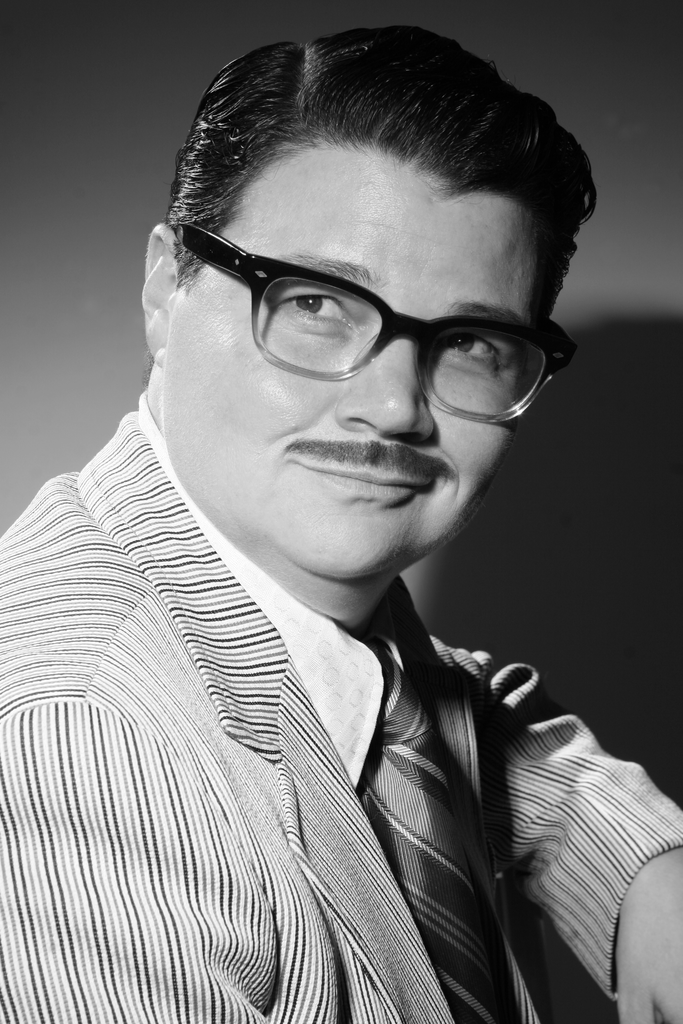
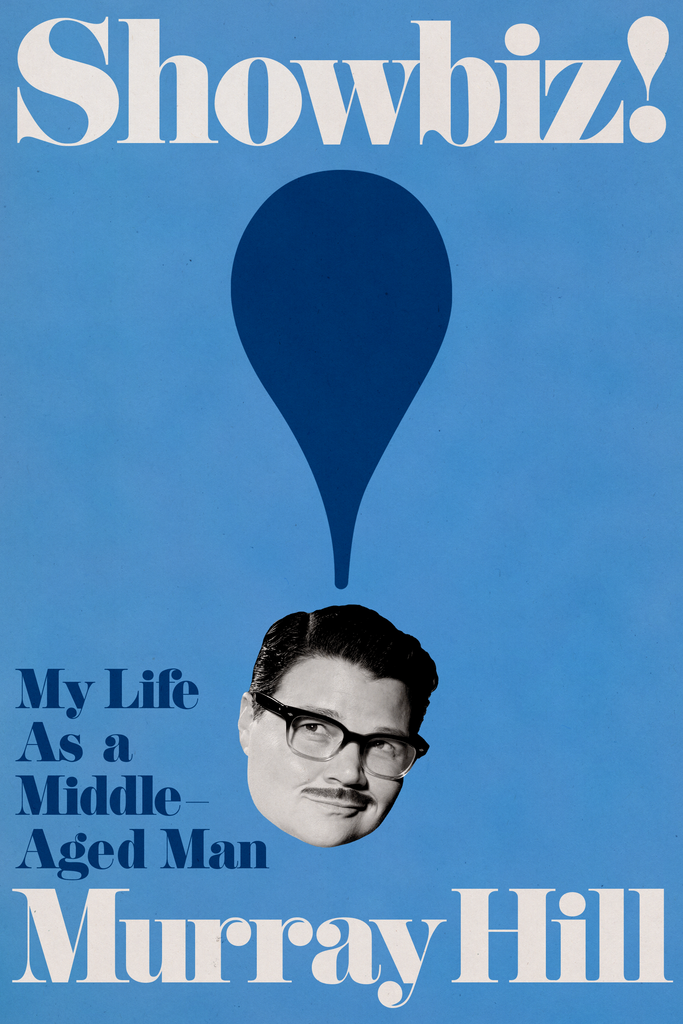
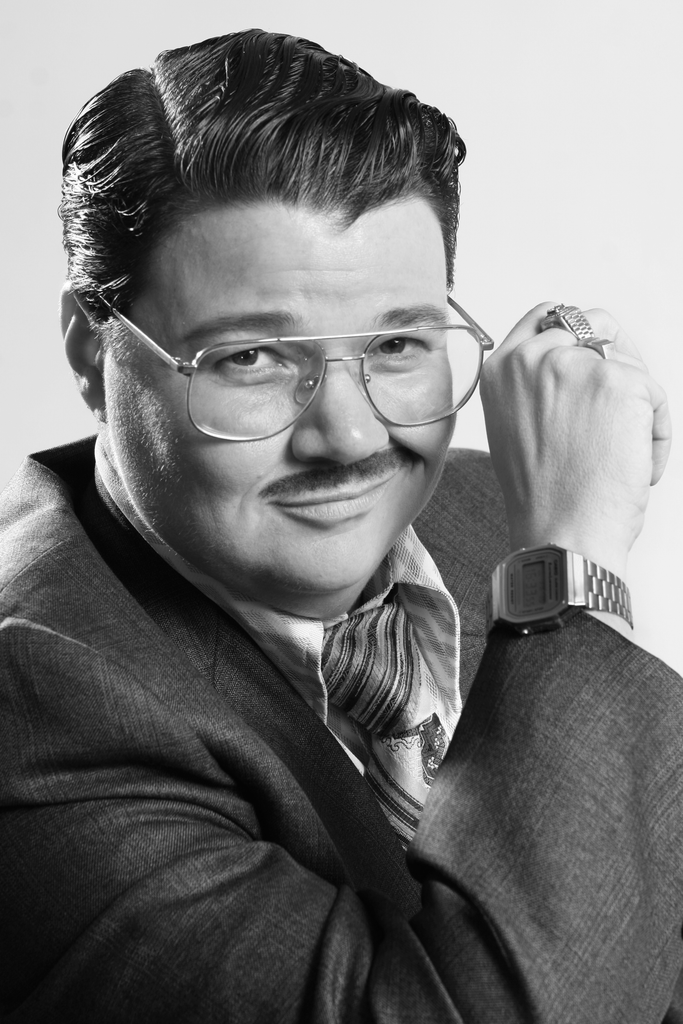
Over the last 30-some years, Murray Hill has built a singular show business career as a beloved drag king and comedian, most recently known for his role as Fred Rococo on HBO’s Somebody Somewhere. Forged in the fires of New York’s downtown performing arts scene, Hill crafted a life for himself that he wanted to live, and in doing so made space for others to do the same. The Murray Hill that started as a Borscht Belt comedy-era shtick slinger, complete with 1960s-inspired backstory, slicked-back hair, pinkie rings, and ruffled shirts, evolved over time into the comedian and actor Murray Hill, a person who was no longer interested in maintaining a persona, but rather in being himself. In that time, he crafted a signature catchphrase, “Showbiz!”, used across life’s ups and downs, not unlike Frank Sinatra’s “That’s Life.” Land a gig? Showbiz! Facing rejection? Showbiz. And so it goes. It’s an apt title for his new book, Showbiz! My Life as a Middle-Aged Man, which arrived in October.
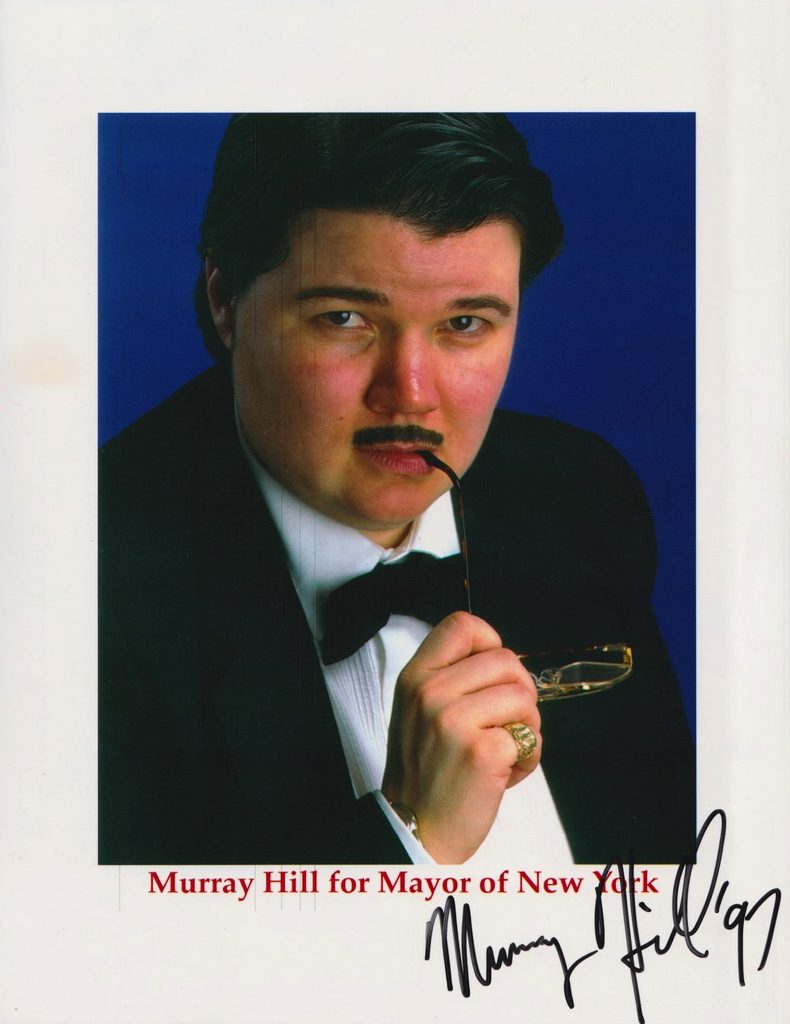
Though Hill was inspired by the “showbiz memoir” throughout his life, his own memoir goes much deeper than the genre is typically known to go. He did take cues, however, from the frankness of Tina Turner’s memoir I, Tina; Sammy Davis, Jr.’s memoirs Yes I Can and Why Me?; and Viola Davis’s Finding Me, all books that he found really “went there.” In Showbiz! Hill chronicles the vibrancy of wild nights out, the highs of seeing yourself on screen for the first time, and even his 1997 run for mayor of New York; but he also reflects on surviving abuse, addiction, and familial rejection with insight, thoughtfulness, and unrelenting candor. As he says, you don’t get to Murray without the full story, and it’s all here.
It’s not lost on Hill that his book arrives at a time when queer and trans communities are facing dangerous backlash across the country, and he hopes that the book can offer an understanding of the way another person lives. “Everybody has a story. [Don’t] judge a book by its cover. We’re all human,” he says. “There’s just so much hate and division and fear about people like me. It’s unfounded. When people read my book, they don’t come away with, ‘oh, you’re trans, you’re this, you’re that.’ It’s like, ‘no, this is somebody that’s had a lot of experiences that might not be exactly the same as mine, but it’s similar.’ There are things people can relate to, so it makes for a full person rather than a stereotype that’s attacked.”
Hill’s book tour continues through mid-November–some dates feature his live Baloney Sandwich Band–and his annual A Murray Little Christmas show will arrive at Joe’s Pub in December. In my traversing of downtown life, I’ve had the pleasure of running into Hill on many occasions–“I don’t think I’ve talked to you during the day!” he laughs when we talk on the phone–so it’s been a pleasure to see him continue to get his flowers.
Here, Murray Hill speaks with V about ‘70s performance art, “going there,” blueprints for survival, and, of course, showbiz.
V: Hi, Murray. How are you?
Murray Hill: Show. [*long pause*] Biz. You want you want you want some Brooklyn realness right now?
V: Always.
MH: Okay. To my right, 1-2-3-4. I’m standing next to four garbage cans.
V: Gorgeous.
MH: And on my left is a pile of dog shit. It’s beautiful out. So I’m outside on the sidewalk in the sun because in the shade it’s like fucking 50 degrees. And I am not ready for that. I can’t believe when I go on tour next weekend I have to pack a jacket.
V: I was gonna ask you about that. It’s been so wonderful to see you in all the different facets of this process. When I’ve run into you throughout–the book deal, the galley, and so on–you kept telling me how shitty it was. And then I read this book, and I couldn’t put it down–it was gorgeous, so smart and insightful.
MH: It took a long time to get that out [and] formed like that.
V: Of course. I wanted to ask you about that, your experience of dealing with yourself as a writer throughout this process.
MH: I know, it’s crazy. Oh, just a light question to start. I know you’re in the scene and you’ve seen a lot of stuff, but I think the challenging part for me was as a performer, and as a nightlife club kid still doing events and going on to have a career is, a lot of my showbiz is external. It’s putting energy out, whether I’m in a room full of strangers, if I’m on stage, if I’m in a club, or if I’m seeing you in a dump fucking basement in some shithole where we were breathing in black mold. That’s all being out with people and energy out, and I love it. I thrive in that. So the hardest part was to do the exact opposite, to sit and look inward, quietly and alone. Writing is an isolating process. I’ve written TV scripts and I write my scripts and my acts, but that’s always based on shows I’ve done or material I’ve done, and it’s shorter form, obviously. I’ve never had to sit there, for years. The challenging part was getting myself used to that. But then when I looked back at my whole life–because I decided the thread was going to be the origin story of Murray–I couldn’t not put the stuff in the book that I did. A lot of my past, all of it, is why I am the way I am today. So I had to write about it. This is stuff that I didn’t think about, and I tried to suppress. So it was like forcing myself to sit down, and then I had to go back in time, like 40 fucking years and try to remember all this stuff, and that was just excruciating. So it was like I was real-time processing and writing about it. It was insane.
V: When the opportunity to write a book first presented itself to you, what was your first thought about what that would look like? Did you anticipate having to deal with all of that?
MH: It certainly wasn’t what I thought it was going to be. Even before I had hit some rock bottoms, I’ve had a pretty crazy story, and I used to, I still do, obsessively read celebrity memoirs. When I started, that was before the internet, and I write in the book that really responded to I, Tina [by Tina Turner] because that’s what showed me I could get out and live, not only survive but have this full life. I think I always knew I had a pretty wild story, but I kept it so close to the vest. After the last breakdown that I had–and knock on wood, let’s hope that’s the end, and I’ve been sober since then–my shrink was like, okay, stop reading celebrity memoirs for a minute. It’s time you tell your story.
V: Wow!
MH: I think everything intersected with that–me playing Fred Rococo, the fact that everybody fucking overshares so much now, the young kids. When I was growing up, or even in the ‘90s, nobody talked the way they do today. There was no language, so I think all those things came together. I’ve had a lit[erary] agent; he’s been on me for like 15 years. Loyal! So we did it, we got a deal, and then, and then it took much longer than I anticipated.
V: I also enjoy a showbiz memoir from time to time, but something I notice, and maybe you have noticed this as well, is that some are not always as forthcoming as you have been in this book. What did you want your book to be that you didn’t see with other celebrity memoirs?
MH: I was very influenced by Nan Goldin and ’70s performance art. A general way to talk about [that] right now is, they went so personal that it was universal. I’ve known that as a concept and not even a strategy, but as a way of being an artist. I hired an editor to help me. In the beginning, I was so protective, and I didn’t want to share anything because I never had. What she said in terms of process was, throw up on the page. Get everything out, and don’t write thinking that you’re going to be revealing too much or that you’re scared of talking. Just put it on paper for you, and then we will shape it and edit it. But around that time, I read Viola Davis’s book and Sammy Davis, Jr.’s books–they go there. They’re so layered. Viola’s book, I related to it because the shit she’s got here is very layered. It’s racism, misogyny, abuse, poverty, and then her own personal life. She went in in the book. It was very inspirational for my writing that she went there, but it wasn’t about details and anger. It was purely for context and acknowledging the truth. The same thing I can say about Kathleen Hannah’s memoir. I’ve known her for over 20 years, and her book also goes there. It’s to provide truth, but also context of what happens to people and it does become a way to connect with people. If I’m just talking about my suit and tap dancing, that doesn’t feel authentic to me. That’s why I decided to torture myself.
V: The book has been out for almost a month, and I know you’ve been doing a lot of press, but what is your experience of having people read the book and respond to the completed work while continuing to engage with these stories?
MH: I mean, I’m still in it. The last book event I had was last weekend, and I get real. People ask me questions about [Somebody Somewhere], but we do get real. It’s like this muscle that is very underdeveloped. In public, I’ve always been Murray. I’ve never had my private life out there. Now I’m like, I got a book because I’m Murray. I’m dressed as Murray. I’m sitting on stage, and now I’m talking about my past when I wasn’t Murray yet. It’s a whole new thing. I still feel a little shaky about it. I did [NPR’s Fresh Air with] Terry Gross, and we went there. It feels extremely vulnerable, but I will say the feedback and all the psychological anxiety is me here. When I’m out, after the events or getting messages from people, I’m blown away. There’s so much me too–which, we’re not surprised by that–and thank you for telling your story. Trans parents of trans kids have contacted me. It’s just overwhelming. I’m glad these interactions are happening because that’s why I did this. I can get lost in that a little bit when I’m tortured.
V: Can you talk about that a little more, your reasons for writing the book this way?
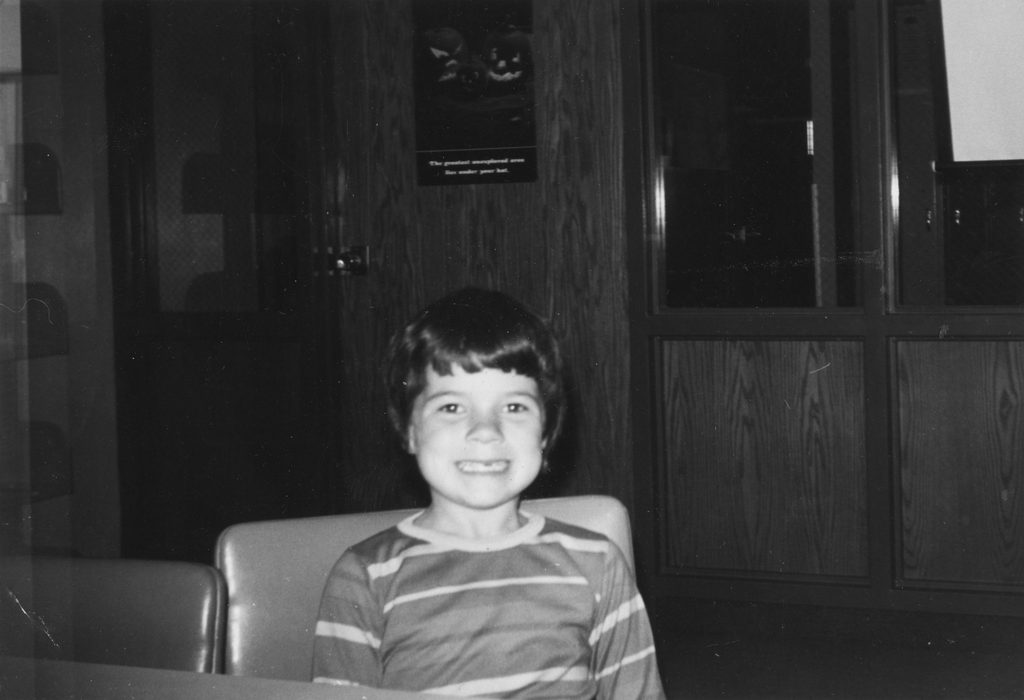
MH: I’ve always done this very quietly, but I’ve always mentored, given back, done service for the community, helped people that are disenfranchised. A big part of that is because I didn’t get that, so I’ve gone out of my way to make sure I don’t repeat the cycles I had to deal with. I’ve tried to turn something negative into a positive. When I played Fred Rococo on Somebody Somewhere, it was on a whole different level of visibility, and that’s when I started really getting emails and messages and people talking to me about “you’re such a good role model for my trans son.” I grew up Catholic so it probably sounds a little Catholic-guilt-y, but I felt a moral obligation to not just present the end result to people. I am someone who has good energy and a hopeful mindset, but nobody knew about what I’ve been through. To share that is to say to trans people, kids, you can have a crazy path, and here’s another version. Here’s a blueprint of a wackadoodle story, but I got to the other side. When I talk to young people, I don’t want someone to have to go through 30 years of suffering to get what they need, to find the people they need. I think it’s like a little blueprint for survival. Showbiz.
V: How do you think writing a memoir affected the way you want to make art and tell stories moving forward, if it did?
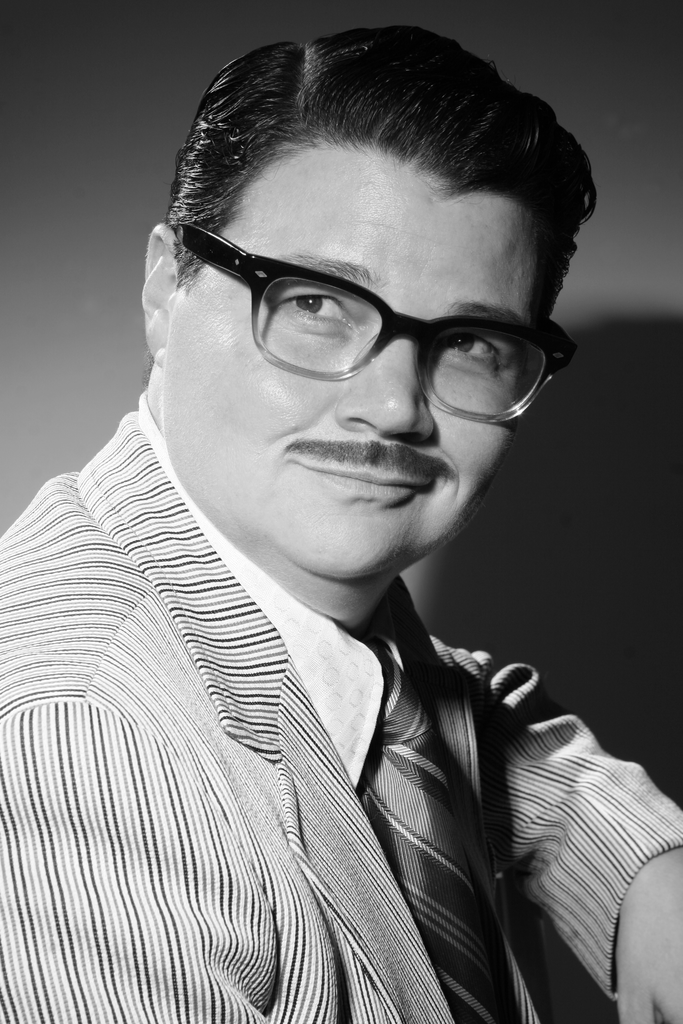
MH: Well, that’s a good question. I would say the last maybe eight years, I abandoned the need that Murray had to have this fake backstory. I’ve really mined my own life for material, but put it through a Murray lens. I’ve always had a little trepidation about that. I think people really respond to truth and authenticity, and think I bring up a lot of issues that are obviously current, in a very non-threatening way that makes sense. It’s almost being more open. I’m a very generous performer on stage, with people who come to see me or people I talk to. I’m still in it, but I’m not hiding anything. It’s out in the open now. Now I’m an actor, but before the internet, you didn’t know about actors. There was all this mystique. I’ve kind of lived in that mystique my whole career. Now I’m a little more grounded and three-dimensional.
V: How is your writing process as a comedian different from your writing process as a memoirist?
MH: My act, how I speak on stage, and how I write for how I speak on stage, it has a vaudevillian cadence to it. Rhythm, short, bing, bing, bing. When I sit and think, I had to actually think of the long form. When I write comedy and when I’m doing jokes, you try to get as much content in one line that says all of the shit and it’s funny. I had to expand how I think about everything. It’s a completely different muscle. I’m also a very visual person, so it was putting words to the visuals. I used to do a lot of black and white photography, which is very detailed, very observant. I had to go back and be like, okay, I need to write what I’m seeing in my mind. It also could be a side effect of ADHD. I just see things, right? And I see things that aren’t there, and that’s the beginning of Murray. I became what I didn’t see, that’s been a way of life, but it also has a visual component. I started photographing communities and people that didn’t have any exposure, and then I became the photograph in a way, but alive, a living, breathing, walking billboard of representation.
V: When you were working on About to Break, the one-person show you talk about in the book, did that affect the way you wrote the memoir?
MH: I was for sure not as open then, and I wasn’t mining myself. I definitely had imposter syndrome around that time. Somebody had assigned me a writer, and it just wasn’t working. The energy was off, and I was like, I’m just gonna write this myself. Then I started writing longer form, and [director] Scott Wittman, who worked on the show, was like, “This is really good.” It’s just that fucked up shit when you’re a comedian, and just in life, I’m like, I can’t write. I’m not a writer. But it’s like, what are you talking about? I’ve been writing my whole life. It’s the mental stigma I had to really get over enough. I’m working on a show. There’s been some interest now to make the book into a show, and I think I’ll have another chance to create something that’s more developed. Now that I’ve gone through this entire process, it’s going to be different work. I just saw Billy Crystal’s show the other night. There was the showbiz, and then there was the hard stuff. It had all of it. It was kind of a retrospective of his career and the greatest hits, but then it also had stuff about the fires and losing his home and family. The whole point of his show at the end was laughter. How do you get through all this tragedy and tough stuff and all of a sudden, and what’s the thread? It’s laughter, and it’s a choice. It’s a choice to laugh. It’s a choice to make people laugh, and to laugh yourself. I think my sense of humor has been around as a coping strategy, a survival mechanism. That has not gone anywhere. I think that will always be there. And I think once that goes, I’m in big trouble. But it hasn’t gone yet.
Discover More