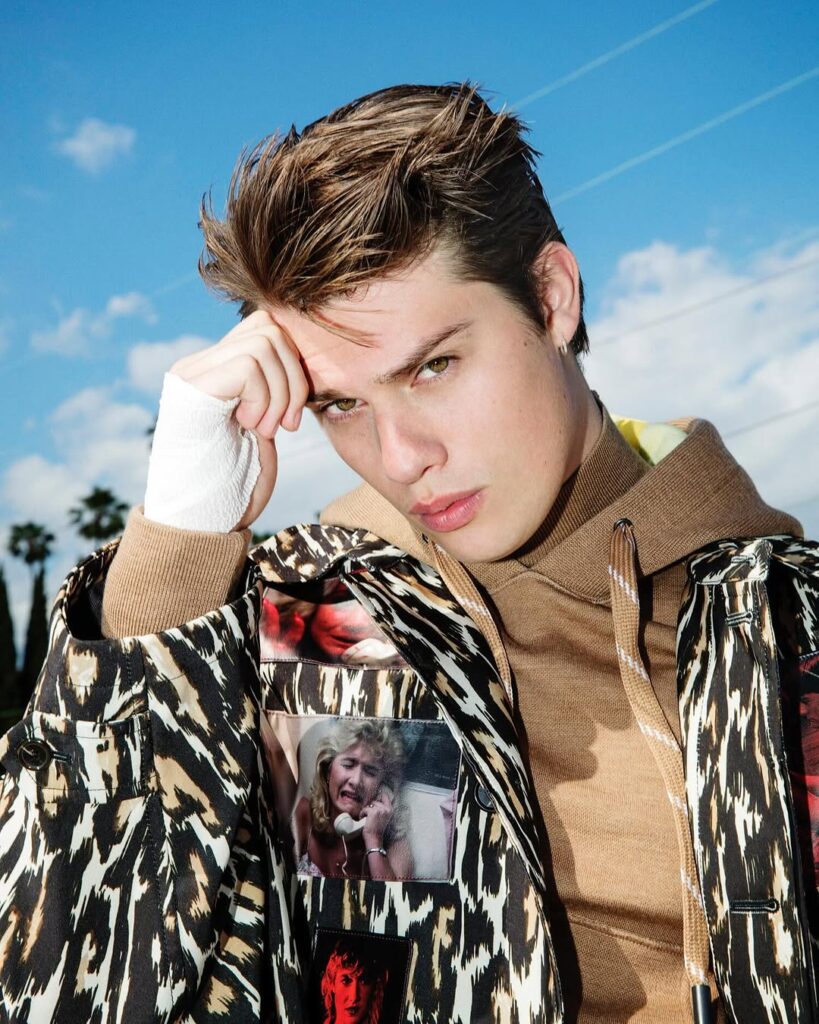
Nicholas Galitzine once again proves that no one commits to playing a beautifully clueless man quite like he does, and 100 Nights of Hero gives him plenty to work with. In the sophomore feature from writer-director Julia Jackman, Galitzine steps into a whimsical fantasy where a melancholic young woman named Cherry (Maika Monroe) is married off to the neglectful prince Jerome (Amir El-Masry) and expected to produce an heir. Jerome, however, has no interest in consummating the marriage, leaving Cherry to shoulder the blame for their inability to conceive. Before departing on an extended trip, he strikes a cruel wager with his scheming friend Manfred (Galitzine), who vows to seduce Cherry to “test” her fidelity. Cherry’s sharp-witted maid, Hero (Emma Corrin), catches wind of the plan and must outmaneuver the dangerously seductive suitor to protect Cherry’s dignity.
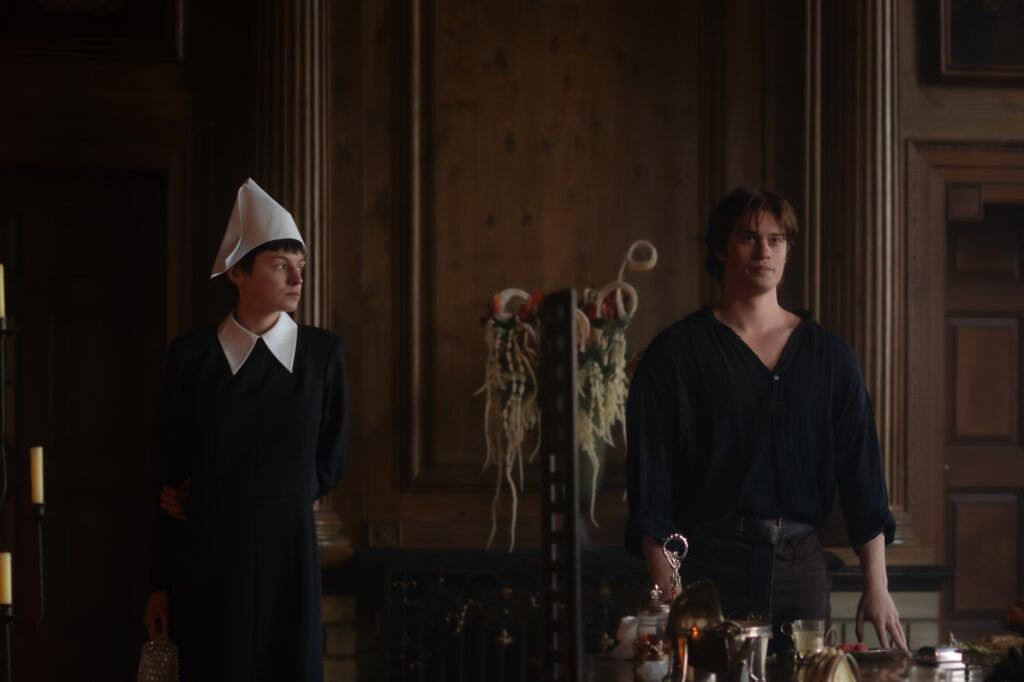
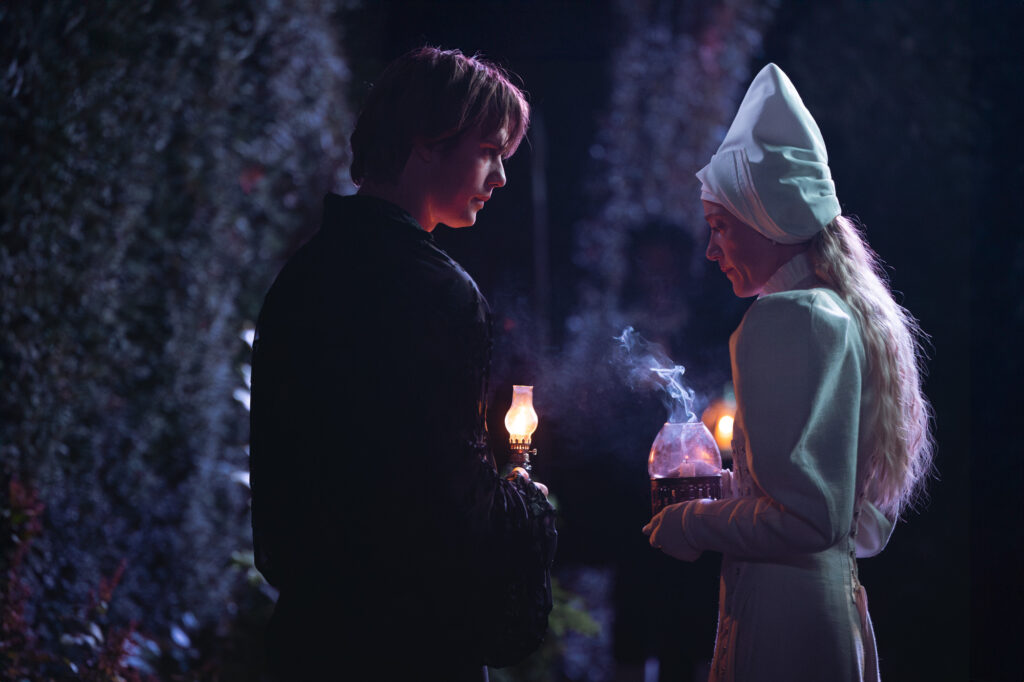
To distract Manfred and protect Cherry, Hero begins spinning a series of enchanting tales about women in similarly precarious positions. Night after night, her stories ensnare Manfred—sometimes literally, as Hero’s stories appear to spellbind those who listen—leaving him unsure of how many days or weeks have passed. One of her central parables follows Rosa (Charli xcx), a young woman facing a familiar marital dilemma. Soon, these tales weave into something larger: a secret society of women who wield storytelling as resistance, using narrative as a weapon against the world’s patriarchal constraints.
Based on Isabel Greenberg’s graphic novel, 100 Nights of Hero is set in a world where women exist primarily for reproduction and reading is brat (no, seriously, they’re not allowed to read). Galitzine is deliciously committed as Manfred: a hammy, medieval himbo whose heightened absurdity brushes against the comedic edges of Bottoms. He’s theatrical, swaggering, and hopelessly convinced of his own appeal—especially when arriving sweaty, shirtless, and dripping in deer blood, assuming such displays will win a woman’s heart.
Below, we connected with Galitzine via Zoom to talk about why he has so much fun playing slightly clueless men, how he found the sweet spot between comedy and sincerity in Manfred, and what he makes of the character’s final choice. (Warning: spoilers ahead!)
VMAN: You seem to have a knack for playing men who are charming on the surface, but, let’s say, willfully oblivious. Manfred fits that boorish, blustering archetype in a feminist fantasy. What is it about these kinds of flawed, inflated men that interests you or draws you in as an actor?
Nicholas Galitzine: I don’t know. Maybe I need to explore that deeper. I should ask my therapist. [Laughs] I think I find people who are very morally gray to be interesting. They’re often their own worst enemies, but also full of potential. When I played George Villiers on Mary & George, he’s similar in some ways. You can see the worst in him, but you can also see the best.
The world Manfred exists in, and was raised in, you can empathize with why he is the way he is. He’s not uniquely a bad person. There isn’t something intrinsically malicious inside him. But he was raised in an oppressive, patriarchal society.
What I always loved about the script is the sense of progression we get with him. He doesn’t end up exactly where we might want him to, but he isn’t impermeable to the words and the stories that Hero and Cherry share with him. By the end, we certainly leave him in a very different place from where we first met him.
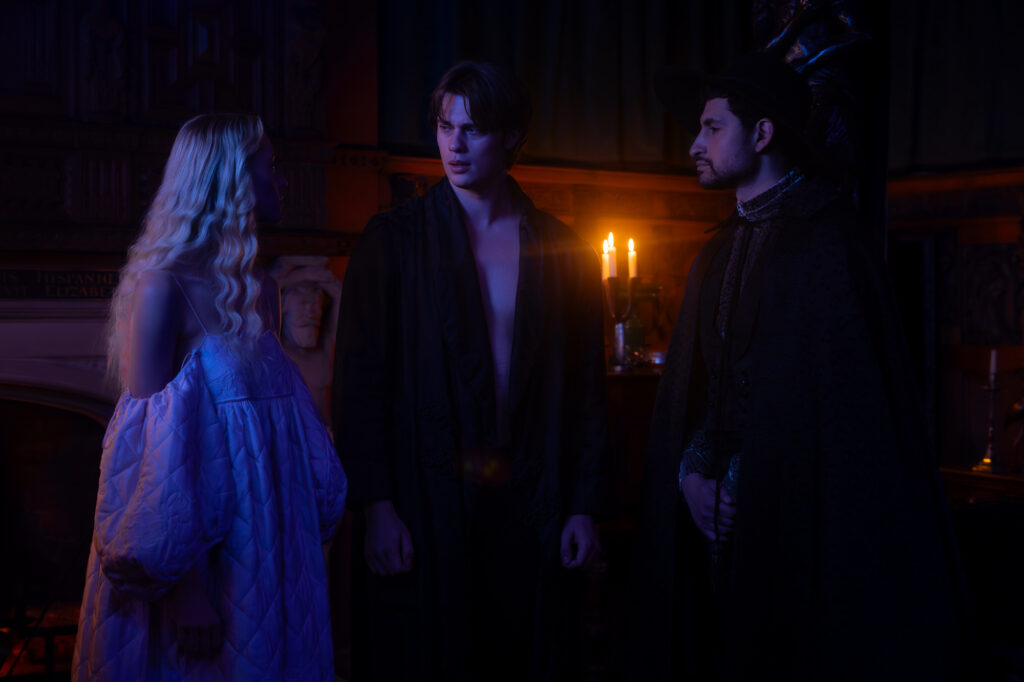
VMAN: While 100 Nights of Hero isn’t an outright comedy like Bottoms, your character definitely leans into that heightened, absurd tone. Manfred is so theatrical, swaggering, loud, kind of like a medieval himbo. In order to connect to the character and the comedic aspect of it, what were the anchors for you? How do you calibrate Manfred’s ridiculousness so he feels funny but still grounded in this world?
NG: A lot of it comes from the script. Julia [Jackman] is really great at sliding from sort of ridiculous, heightened comedy into sincerity. It comes from a total belief in what your character is saying. Bottoms was a really formative job for me because it was the first outright comedy that I did. I was around real comedians, and I think the quintessential theme when playing comedy is, in fact, that you don’t ever play the comedy. I think the world that Julia created is so ridiculous that you don’t need to oversell it. And in that way, it becomes easier to drift back into the sincerity of these characters’ experiences.
VMAN: Did Julia give you room to improvise on the more over-the-top moments?
NG: Yeah, completely. He’s in this grown man’s body, but he’s a child. The notion that you’d think a woman would be really attracted to you for bringing dead stags to her every day—it’s so detached from reality. Julia was very trusting with me. I was so honored that she came to me first before anyone else was even attached to the project. And she’d obviously seen Bottoms, and there is a link between the two characters. I think we understood who the character was and how to play him.
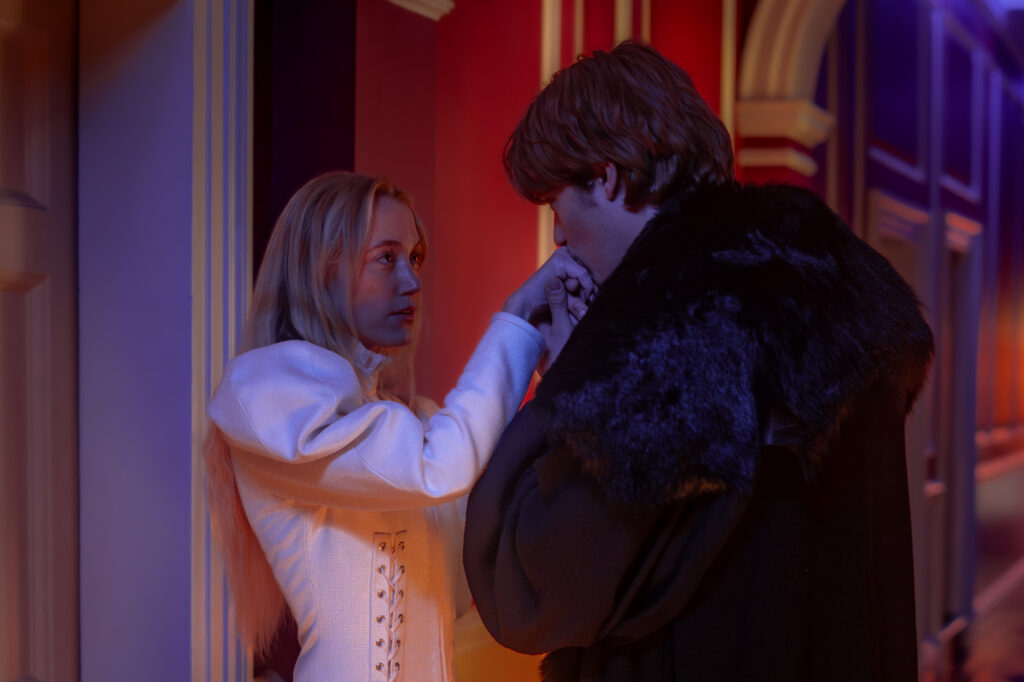
VMAN: There’s that pivotal choice towards the end where Manfred has to decide whose story he believes: is he going to break the chain and give it his all for Cherry and Hero, or is he going to save himself? He turns to Cherry and says, “I’m not like him,” but then ultimately makes the exact same choice he just claimed he wouldn’t. How do you interpret that moment? Do you think he truly loved Cherry, or is he still trapped in the performance of masculinity that the world expects of him?
NG: It’s interesting, and I wonder where Julia ultimately sits, because we played that scene in a number of different ways, and it’s interesting to see how it was edited in the end. For me, I don’t know if Manfred loves Cherry. I think there is a genuine feeling, but is it a genuine feeling for who she truly is? Or does he want her to be an idealized version of herself that can coexist within the boundaries of who she actually is as a person and the boundaries of this world that they live in?
Ultimately, we all like to imagine that we take a stand for what is right. But again, the really difficult thing for Manfred is: this is the world he grew up in. It’s all he knows. Breaking out of that is really, really difficult. I think he registers the shame he feels for making the wrong decision, which is probably more than you would say for him when we meet him. It’s progress, but it’s not enough.
VMAN: What do you think happened to him after he left?
NG: He’s a very charming man who benefits a lot from the world that he grew up in, and so for someone to act against their own best interests is a difficult thing to do. I hope—I really hope—that he comes good, because I think there is a good person there. But maybe in the Manfred sequel.
VMAN: 100 Nights of Manfred. Was there a scene you especially loved doing? Favorite scene from the film?
NG: I only shot 10 days on the movie because I had to go and start prepping for He-Man. But every day was so much fun because the world is so fantastical. I will say, getting to set the first day, first scene, and being drenched in blood and being told, “You’re gonna drag a stag up”—I mean, that was pretty real, I will say.
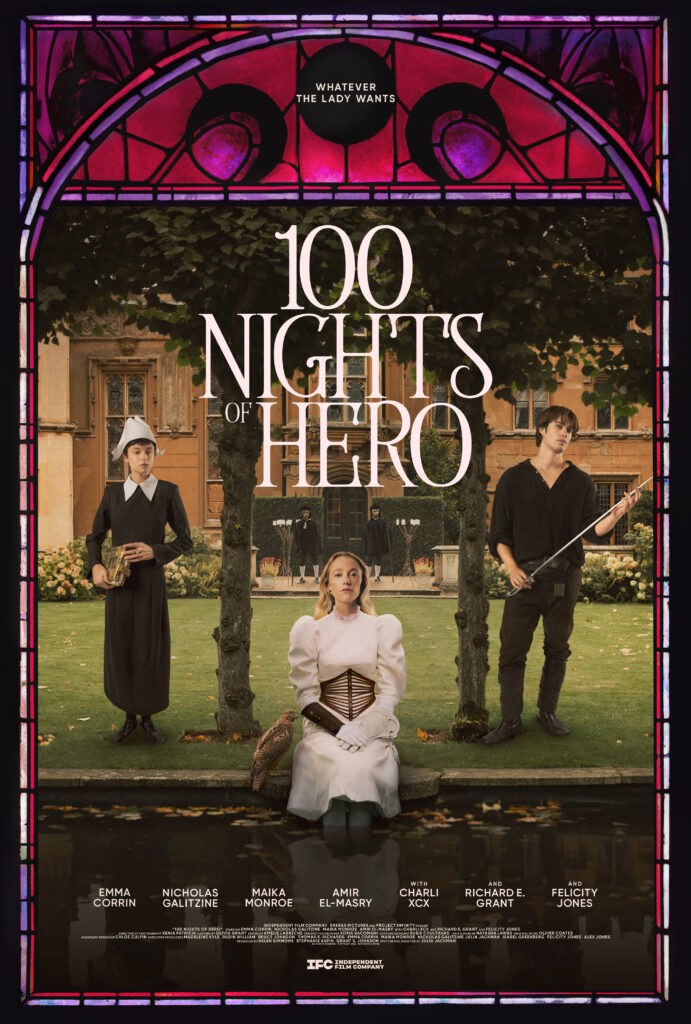
There was a sort of wonderful scene where the falcon comes in. Cherry and I are sitting together in that little pool, and Hero kind of stands opposite. The distance between them is so massive, but the confrontation is so brilliant. It’s very hard for me to pick out a singular scene.
VMAN: What is your interpretation of the ending?
NG: Well, I think the reality of what happens to them is quite clear. There is a joy in the sort of spiritual quality of whatever may exist after for these two people who choose each other. It’s such a beautiful touch from Julia in keeping the fantastical quality of the movie. It’s a really beautiful ending.
Discover More