Rescued from the Trash, Bob Mizer’s Catalog Boards Reveal Queer History’s Sexy Side
Mizer’s legacy lives almost anywhere the male form is appreciated in all its glory now
When pioneering homoerotic photographer Bob Mizer passed away in 1992, dumpsters were arranged in the courtyard of his building. Slowly, they filled up with Mizer’s belongings and artifacts from his business of photographing muscular male models for nearly 40 years. Among the most famous in his category, Mizer had founded the influential photography magazine Physique Pictorial, known not just for its images of strapping men but the way he fought against homophobic lawmakers for his right to publish them.
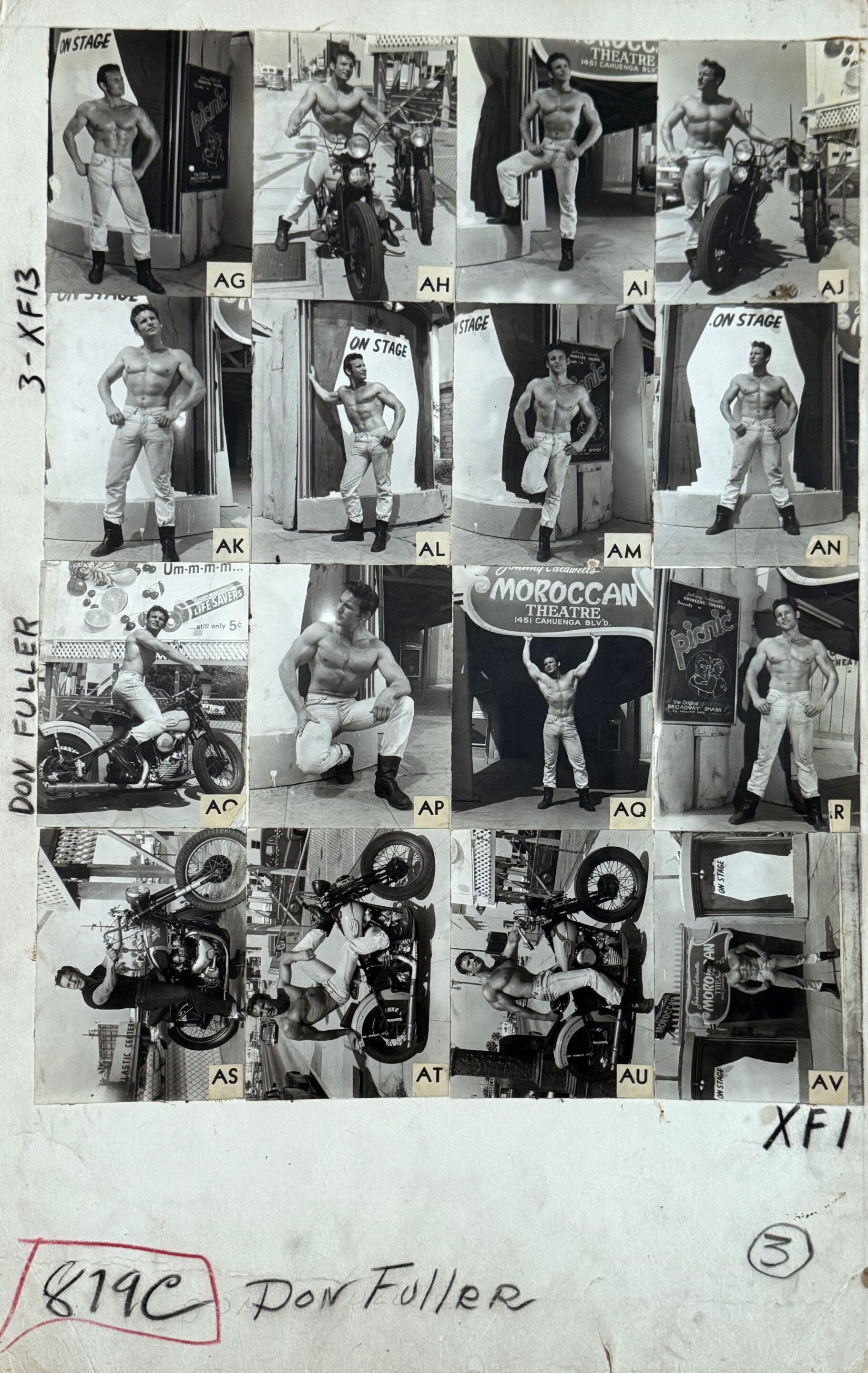
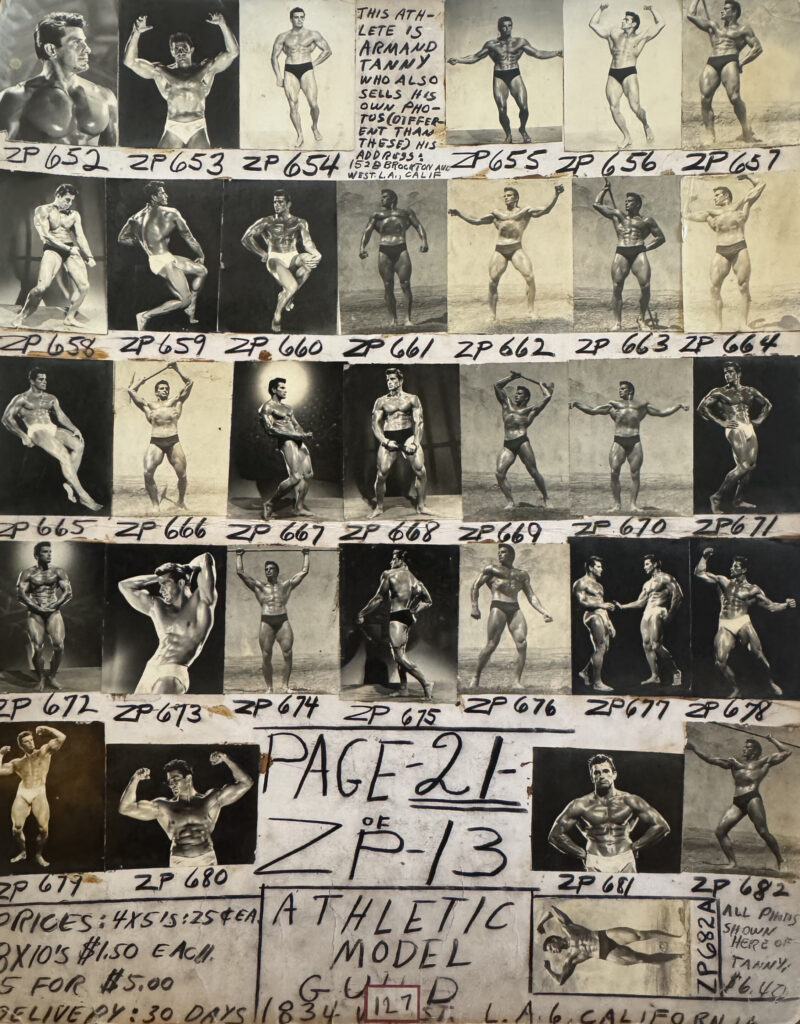
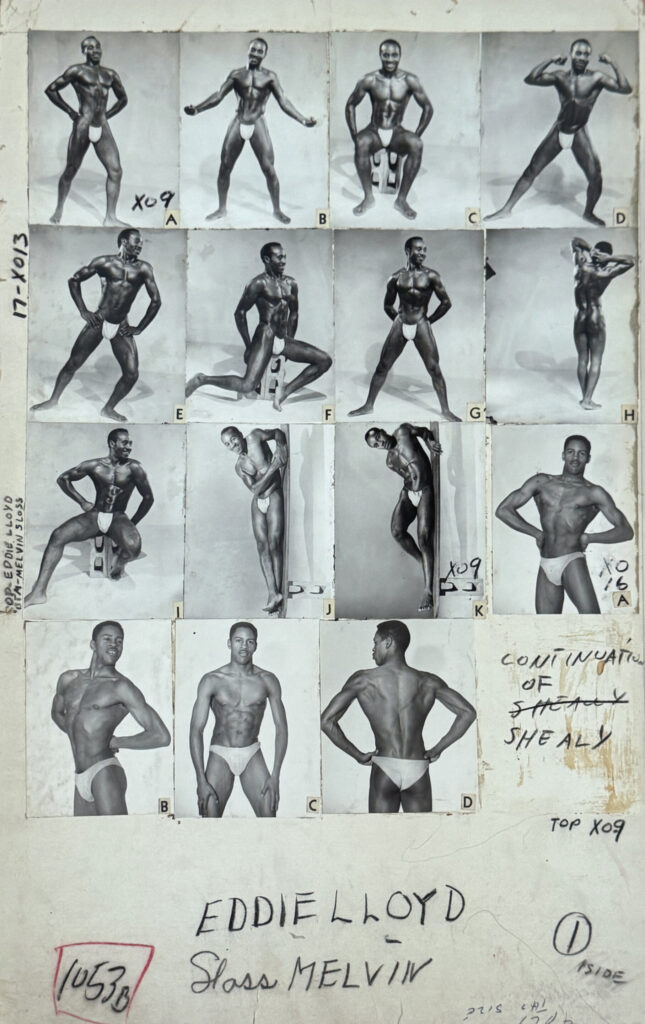
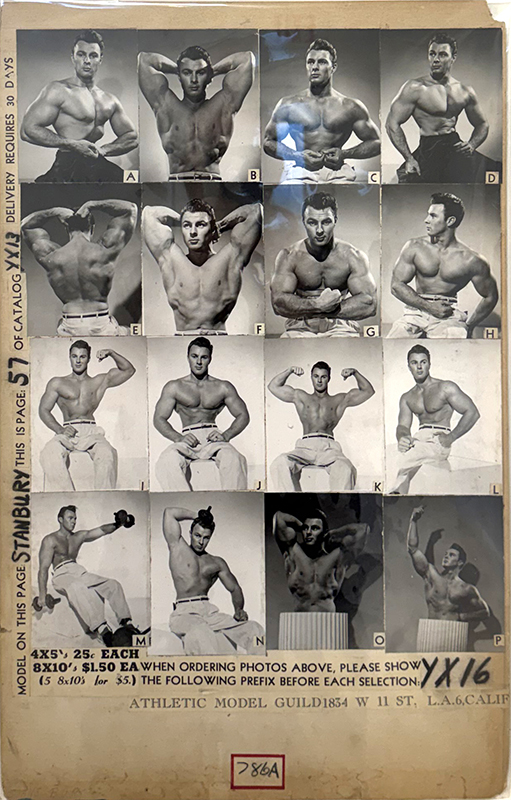
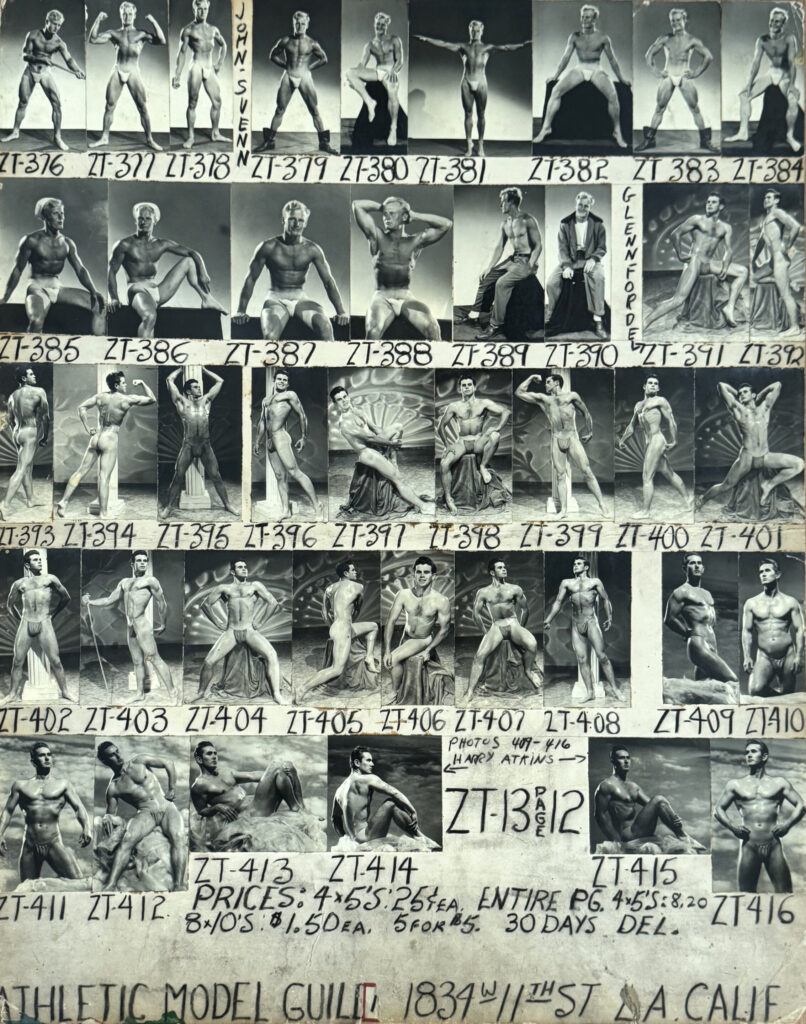
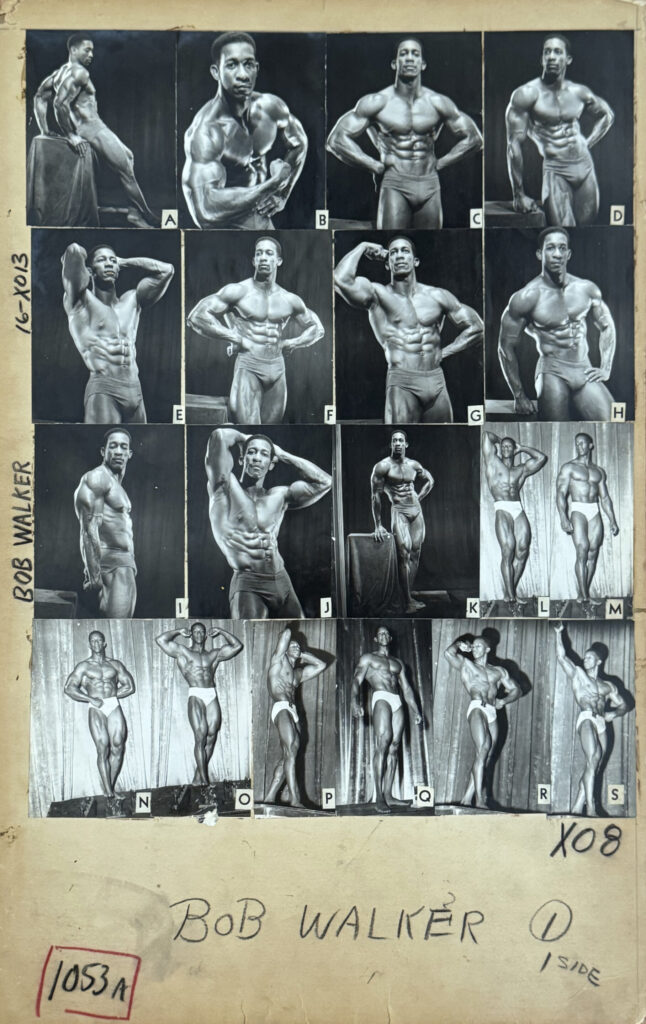
Not everything was lost from Mizer’s estate–a great deal survived and became part of what’s now the Bob Mizer Museum and Photographic Archives. Mizer’s work even went on to appear in an exhibition at the Museum of Contemporary Art, Los Angeles and his complete run of Physique Pictorial was republished in a three-volume collection by Taschen. But amongst the wreckage, one of Mizer’s former assistants found a series of nearly 40 catalog boards, 28” x 22” and 22” x 14” in size. As part of his Athletic Model Guild business, where he sold images of male models, the photographer affixed his images to these boards, then duplicated the boards in smaller sizes to send to customers who could then choose their favorites to purchase. The former assistant in question approached gallery director Daniel Cooney about exhibiting the catalog boards he salvaged, and now they’re now on view at Daniel Cooney Fine Art in Santa Fe, New Mexico until July 25.
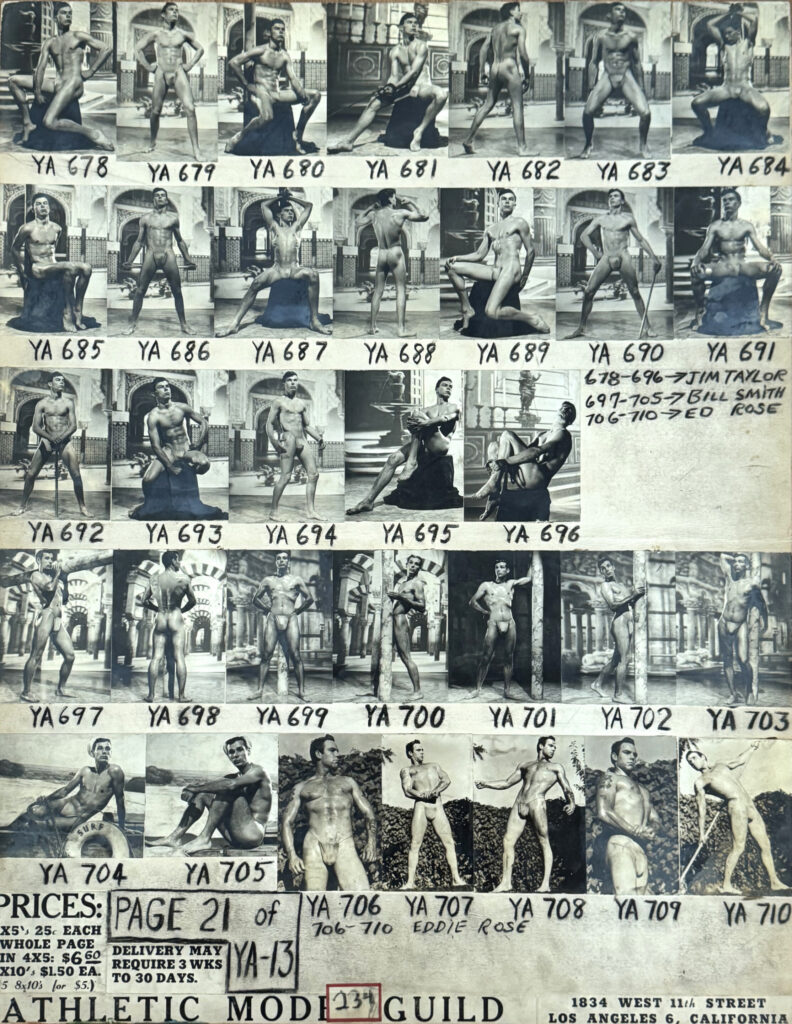
In perfectly contrasted black and white, each board bears (and bares) shots of models in an array of poses–some shirtless in jeans and boots, some in barely-there posing straps, some flexing in the signature bodybuilding poses we’ve come to know. Sailors, motorcyclists, blondes, brunettes, and beach babes abound. It’s a coterie of eye candy that’s as much fun to look at as it is influential and historical.
Mizer’s legacy lives almost anywhere the male form is appreciated in all its glory now, whether in the work of Jack Pierson or Robert Mapplethorpe, Andy Warhol or David Hockney, or countless others, Cooney says. Mizer also discovered a Finnish artist named Touko Laaksonen, put his muscle-bound illustrations on the cover, and gave him a nom de plume: Tom of Finland.
But it wasn’t easy getting there. First, Mizer had to handle homophobic lawmakers, waging a battle for free speech that was as much for himself and his fellow publishers as it was for the queer community. David K. Johnson, history professor at the University of South Florida and author of the 2019 book Buying Gay: How Physique Entrepreneurs Sparked a Movement, considers Mizer a modern gay rights pioneer.
Mizer came out at a young age and saw throughout his teen years the injustices leveled against the queer community. One of his initial goals was to “help the homosexualist,” as was the terminology of the day, by writing a book. He ended up instead first creating the Athletic Model Guild physique photography studio in 1945 and followed it with Physique Pictorial, whose first issue debuted in 1951. Throughout the magazine’s run, he would write a multitude of editorials against censorship and oppression, Johnson says.
Physique photography was initially borne of weightlifting magazines, which themselves arrived as “an outgrowth of the turn-of-the-century physical culture movement, a response to a crisis in masculinity in a rapidly urbanizing and industrializing America,” Johnson writes in Buying Gay. An interest in developing one’s form for strength became a trend, and bodybuilding followed in the 1930s. The latter, however, was often brushed off by the former, Johnson continues in the book, as “sissy stuff,” in the parlance of the time; in fact, many in the bodybuilding community were gay. The muscled male figure, however, did make beautiful photographs. Indeed, this is the era of photography where we get the term “beefcake” as a descriptor. And, as some photographers soon found out, these images also sold magazines (or, as it happens, caused them to disappear). Mizer was among them.
“Physique Pictorial was one of the first gay-owned and operated commercial enterprises in the United States, and it circulated everywhere,” Johnson says. Plus, he continues, “the fact that he created this magazine…was thumbing his nose at the post office.”
The post office at the time chased down Mizer and many of his photography and publishing compatriots, convinced that his images were obscene. But they were no racier than magazines filled with similar images of women in magazines by their heterosexual counterparts, Playboy among them, that were allowed to operate freely. Mizer would run into trouble with the law regularly between the 1940s and 1960s, at one point even serving time at a California work camp. But he refused to cease publication.
What ended up happening, Johnson says, was that physique magazines like Physique Pictorial “created this whole commercial network that was available in the 1950s in which you could not only buy physique magazines and physique images, photographic images of artwork and clothing and books and all kinds of sort of gay related items,” he says, they also helped “gay men imagine themselves as a national and even international community.”
The world of physique magazines was by no means a perfect one, assuredly; it was the 1950s and 1960s, after all. Issues of racism and classism were no stranger to their pages–though Mizer photographed men of many ethnicities in his studio, many publishers cited the issues that sold best across physique magazines were often filled with white men and thereby photographed them more often. Similarly, Mizer wanted the young men in his magazines to appeal to upwardly mobile individuals and created backstories for many to show they came from “nice families.”
But to see one’s own desires live on a page, Johnson believes, created the potential to unify and, eventually, fight for liberation–people had to know they had a community first before they could advocate for one.
When it became legal for magazines to publish full-frontal nudity in 1967, the need for the once more modest physique magazines largely disappeared; Mizer began running full-frontal nudity in 1969. But, as Johnson says, gay publications almost immediately became nostalgic for the early days of physique magazines–for a generation of men, these publications would have been the first time they encountered male desire.
Seeing Bob Mizer’s catalog boards now reveal the inner workings of his business and showcase only a fraction of the breadth of his work over time–according to the ONE Archives at the University of Southern California, the world’s largest queer archive, the Bob Mizer Museum believes that in his time Mizer photographed over “10,000 models, created over 2,000,000 images, and produced 3,000 short films.” But to see Bob Mizer’s work at all now is something of a miracle, knowing the way he fought for the right to distribute it and how it almost disappeared.
Discover More