Skilla Baby On Surviving, Persevering, Faith, Fakes and Fallen Icons
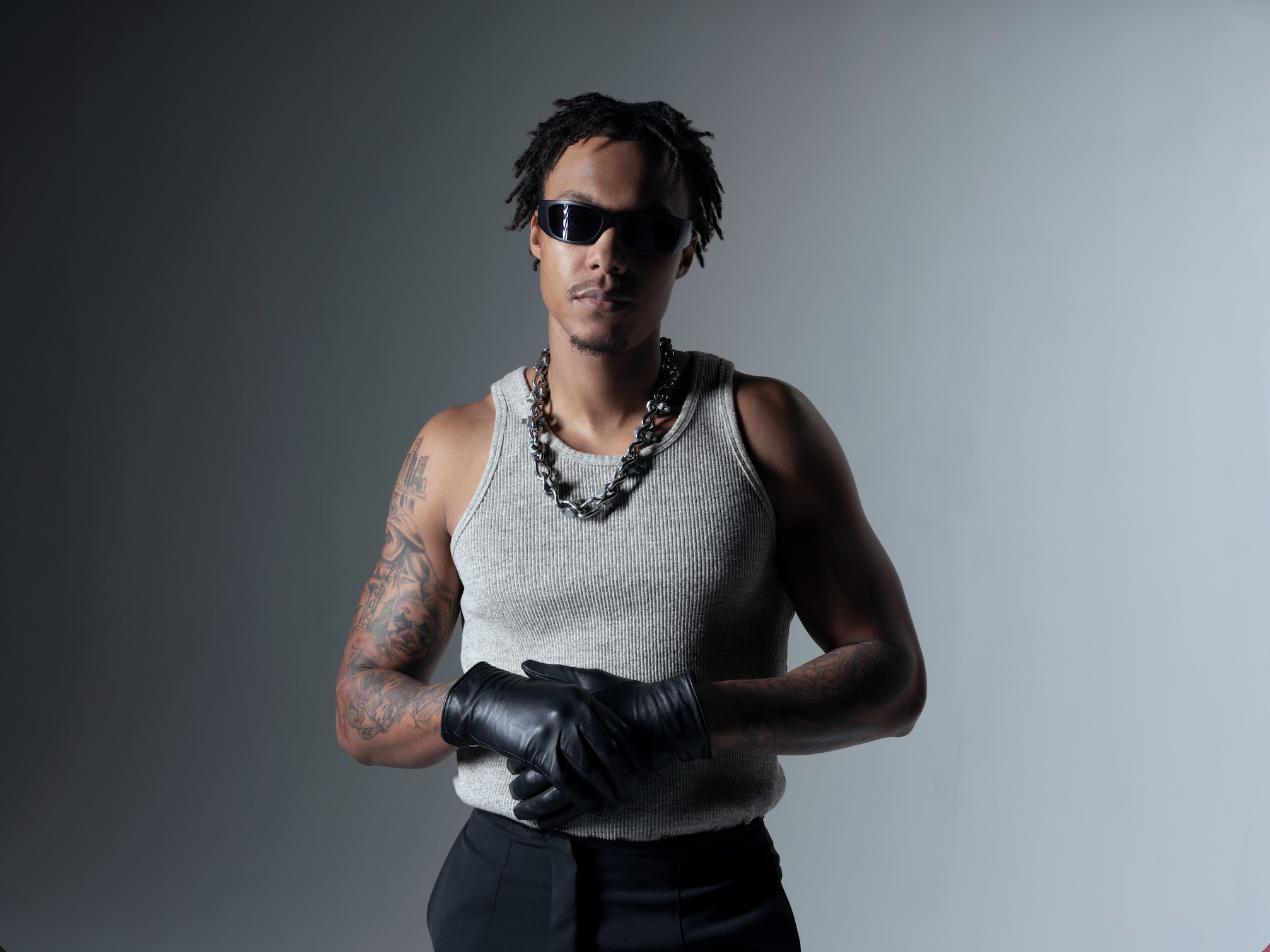
The Detroit rapper’s ‘The Price Of Fame’ melds classic sounds with painful lessons following his 2025 shooting
It’s not often that you encounter a new album that is almost entirely informed by one life event. Then again, life doesn’t hand out events every day like the one that befell Skilla Baby last year.
On May 22nd, 2025, the magnetic Detroit rapper who’d been on an upward trajectory for the better part of five years and was in the process of planning what would be his debut studio album was ambushed on the streets of his hometown. More than 20 rounds were fired into his SUV, which he then crashed into a commercial building off of the famed 8 Mile Road. Incredibly, he survived. With injuries to his head, back, and especially his hand, he required two surgeries to get his body right and even longer to process the trauma.
The life-threatening experience did, however, spark direction and drive in the rapper. Already intending to make an LP that spoke more to life lessons and perseverance than to mere hedonism, the shooting sowed the seeds of writing and recording The Price Of Fame, out August 21st and easily Skilla Baby’s most powerful and personal work to date. His bars are sharper and more eloquent, and his flow is sometimes unrecognizable from the youthful, melodic bounce of early hits like 2022’s “Icky Vicky Vibes,” and the sexy, slinky self-described “girl record” that became a signature, 2023’s “Bae.”
The Price Of Fame is alternately defiant and menacing (“For Sure,” “Respect My Gangsta,” featuring Nas, “Tough Guy”); blue-collar inspirational (“Get You Some Money,” an ode to the grind which dropped as a spring single); lighthearted (“London Ting”); and yes, tracks that as Skilla says, are “for the girls”: the very horny “Ain’t Enough” and the sweet and soulful “Face Card” on which Skilla is joined by Bryson Tiller and Chris Brown, each offering a verse aimed at building a woman’s confidence. The confessional “God’s Favorite” and a very funny skit, “The Suits,” also take aim at industry fakers, and there’s another element new to the Skilla Baby palette: faith.
Forging a renewed relationship with God may not be surprising considering Skilla was narrowly granted a new lease on life last year. But the record’s spirituality was enhanced when the rapper met two gospel greats: pastor and producer Warryn Campbell, and his wife, the Christian R&B diva Erica Campbell. Warryn opens The Price Of Fame with a full-throated prayer, “Baptism Sunday,” and Erica joins Skilla for the “We Are The World”-inspired “Strength In Numbers.” Skilla then closes the project with “He Never Left” – driven by the provocative line, “Who you talking bout? Jesus or me?”
The rapper likes such potentially divisive “conversation-starter” bars. Witness the number of times on the album that he invokes the names of some of rap’s heroes lost to gun violence over the decades. On “No Tears,” a moving meditation on death, there’s Notorious B.I.G., Tupac Shakur, King Von and PnB Rock. “I’ll die by my respect, I seen Nipsey do it,” he says on “God’s Favorite” and on “Paranoid,” he offers, “living thug life like I’m Pac now.” Especially eyebrow-raising when released was the cover art for the project, which features Skilla in a wheelchair, recreating a famous Tupac photo from 1994. It’s potential third-rail stuff, but Skilla knows how to get people talking.
Still, the rap icon who looms largest over The Price Of Fame and Skilla’s current career in general is music’s most famous shooting survivor, 50 Cent. You could hardly script an association more perfect. The Get Rich Or Die Tryin’ star met Skilla Baby in 2024 and was impressed enough to evolve into a mentor, advising on the new album, and making a cameo in its striking trailer. Appearing on a rooftop as a cigar-smoking guardian angel-type, 50 tells Skilla: “You got that disease. It’s called ambition…There’s a price for fame.” Skilla, who also has a burgeoning acting career, will appear in the upcoming prequel to the 50 Cent-produced Power series on the STARZ network.
Later in The Price of Fame’s trailer, in strikingly vulnerable terms, Skilla says, “I damn near lost my mind” following his shooting, adding that he “lost a lot of people in my life that just gave up on me.” Fourteen months later, he has plenty of people in his corner, and is ready to prove any doubters wrong. If he’s paid a price for fame, he may be primed for the payoff. VMAN talked to Skilla Baby in midtown Manhattan in late July.
VMAN: Skilla, congratulations on this really powerful new record. It’s obviously been impacted by the events of last year. But how much did you have a new album already in the planning stages, in May of 2025 when the shooting happened? And how much did the shooting change those plans?
Skilla Baby: My manager Juan was asking me to “drop music, drop music.” And for a long time I felt stuck, creatively. I was trying to think of the name of a project, and how to go into my first studio album. And I did have one record, the one called “Strength In Numbers” – the kind of “We Are the World” type of song. That’s really the only concept that I had. I was still stuck and I kept telling my manager, “I don’t know. God will let me know when it’s time to drop music.” And I was saying that a month before I got shot. I got shot, and then once I went into the album process, I started having things to talk about. So I think that event opened me up creatively. And I’m not saying I’m wishing that people get shot, or any harm on people. I am just saying that from my experience, it was like, in a way, the best bullet I ever caught. As far as helping me, spiritually and creatively, it put me in a place where I was reevaluating everything I was doing in life, too.
VMAN: So then, after the shooting happened, how long did it take until you were kind of mentally ready to think about writing and recording again? Did it take months?
Skilla Baby: It took a few months, only because – like for the first month, I didn’t have surgery yet. So I still had bullets in me. And I was kind of angry. Like, it hurt me mentally more than physically. So I was going through the emotions of getting shot, asking ‘Why did this happen to me?’ and praying to God, going in and out from anger, to being content with it. So I was in a different headspace for about a month.
VMAN: The trailer for the album obviously got a lot of attention, with you joined by 50 Cent. Did the two of you script all the dialogue in that?
Skilla Baby: We had creative direction, but once we saw the creative direction it wasn’t to – it didn’t feel like us, all the way. So we critiqued it, and changed it a little, the language and stuff, me and 50 sat down with the director, told him what we wanted to get out of it. And then I kind of directed the end part, with me talking and stuff. So it was like a collective group.
VMAN: What’s interesting is in that end part, you are very open in the voice-over about how you felt “lost” and “humiliated” and “angry” in the wake of the shooting, and how it took a toll on you. Then a few days later, I saw your podcast conversation with Tony Yayo and Uncle Murda [The Real Report], and in that you kind of treated the shooting more like, “you never know what’s going to happen” or even sort of a “comes with the territory” type of attitude.
Skilla Baby: For sure. I was talking to a woman who studies psychology, and she told me that the brain is such a tricky thing, that you can’t predict what it’s gonna do. You can’t really predict your emotions, for real. You can have a deep love for something right now and then [snaps fingers] two seconds later feel different about it. So, with that it’s like – I understand where I was born, the situations I’ve been in, and what comes with being where I’m from. And also, it hurts me mentally, going through some of these things, but I understand my role as a son, as a brother, as the patriarch of my family. As a leader. I still have to show people that I can’t let life keep me down. Life can’t hold me down. I have to beat it, because other people depend on me. So even when I feel defeated, I can’t show it.
VMAN: As far as the concept of the title The Price Of Fame – when did that come to you, how did it come about, for the title song or as a name for the whole project?
Skilla Baby: The title of the project, I had that before the song. I was just thinking about all the things that I was going for, and that I had to sacrifice, to be successful, you know? And it wasn’t like, “I’m famous!” It’s like – Kev, right? [Skilla’s publicist, sitting across from us] Kev has to come to work every day, no matter what he wants to do. He might wanna go eat, he might wanna hang with his family, he might not want to deal with an artist, for their attitude. Or deal with me, for the day! But that’s what he’s sacrificing, to do what he loves to do, or what he needs to do to feed his family, feed himself, you know? So yo, I’ll sacrifice my body, everything, to be successful, you know? To be good at what I want to do, for my story. For my legacy. So I think that’s what the price of fame is. All the hours you put in, all the things you sacrifice, my childhood, partying, drinking, drugs, I sacrificed all those things to be successful and to take care of my family.
VMAN: To widen out, a price of fame might be as we saw last year, a physical risk, it might be having to uproot yourself and your family, move somewhere, or it might in a musical sense be this balancing act you’ve talked about before, between making “street” records and making those “girl” records – that maybe that is the cost of doing…
Skilla Baby: …business. For sure. Yeah the price of fame is whatever is cost you. And that’s why I wanted this album to be more personable. This album is not meant for the one per cent. It’s for the average man. Like – whatever being successful cost you? That’s what the price is. Because there is a cost of doing business to everything you do. Anything you want to do, you have to sacrifice something, you know? And I just wanted to tell that story for every man, the average listener, the working man, the struggling man, the homeless man – everybody.
VMAN: There’s a funny skit track on the album called “The Suits” that imagines you having a conversation with a record executive who says, “You know, rap is in decline” – and he suggests you get a TikTok dance, or do a song hook with a British accent, or have a Skilla-branded air fryer. It’s hilarious. But as for that comment “rap is in decline”, which you do hear people say at times nowadays, how does that make you feel? Especially as you have described The Price Of Fame as being a “classic hip-hop record.”
Skilla Baby: I believe it when they say rap is in decline, number-wise? But I think rap is the only genre where we let anybody do it. Everybody else’s genre, they hold it sacred. In R&B? If you can’t sing, they don’t just let you do R&B. If you don’t take it serious. If you’re pop and you don’t really love pop, they don’t let you do pop music. If you do country music, but you’re not familiar with the country sound and you don’t value country artists, they don’t let you do that. But rap is such an inviting space right now, when at first it was sacred. Anybody can just go make a rap song now. You can just go make that on your phone. You don’t really see that for other genres of music. So that’s why I think it’s in decline, because it’s watered down.
VMAN: “No Tears” may be the most moving song on the album. It’s a reflection on loss and death but also surviving. You talk about being tired of seeing people dying and crying, there’s a line about “funerals give me the chills” and then you invoke names of people we have lost, Biggie and Tupac, Nipsey, King Von, PnB Rock – do you remember how that song came about and what it means to you?
Skilla Baby: Yeah there are a couple of records on this album that started off just raw emotions, and we didn’t even have drums on the beats. So – BoogzDaBeast, he chops up samples and stuff, and one of those records was “No Tears.” I had come to the studio early, every day, and we would just knock records out. And one day, he had this just raw sample. It was a slower tempo, we didn’t have no drum to it, but I was just like “Load that up!” I liked it so much, And I just started rapping, and at first I didn’t know what direction I was going in. And I was just thinking about how the beat made me feel, cause I was still in the process of recovery, I was on pain medication, I didn’t have my second surgery yet. So I was going through so many emotions.
VMAN: When you invoke the names of the greats that we have lost like that, is it hard for you? Or like, the wheelchair image [on the album cover] that recalls Tupac’s photo. Is there ever a part of you that’s like, “Are people gonna be feeling like I am stepping too much on Pac’s story?” Do you know what I’m saying?
Skilla Baby: Me personally, I didn’t want to do nothing involving my shooting. In my rollout, or none of the music.
VMAN: Or the artwork?
Skilla Baby: Artwork or anything. I really didn’t want to do it at first, and I had to really sit back and reflect on, “If I’m gonna tell the story, and be vulnerable, I can’t hold anything back. I can’t half tell the story. I can’t pull on these emotions and heartstrings, and not go there.” Cause people want to know the story, and if I leave something out, it’s like, “You left that out. We know you left that out. You’re not being real with us.” The Tupac thing – like I had everything planned out, my rollout. Like, I had all of my rollout in my phone, because I was studying my favorite albums? Like ones that were classic albums to me. Cause people were telling me the rollout is everything. So I went on a deep dive, I went to Miseducation of Lauryn Hill, All Eyez On Me, Ready To Die, Reasonable Doubt, Off The Wall, Thriller, Get Rich Or Die Tryin’, It’s Dark and Hell Is Hot. A rabbit hole of my favorite albums. And so everything I wanted to do with my rollout, I wanted it to be a conversational piece, and feel nostalgic. So with the Tupac thing, it’s like – I’m not trying to compare myself to Tupac. I’m trying to pay homage to somebody that influenced me, and went through similar situations. Also with the 50 stuff, I want everything to feel nostalgic, and see similarities, and evoke conversations and comparisons. What’s alike, and what’s different.
VMAN: Plus 50 has just been a supporter of yours.
Skilla Baby: For sure.
VMAN: Yeah. I think for people to look at that and say “He’s comparing himself to 50” or “He’s comparing himself to Tupac” it sounds like – they’re missing the point.
Skilla Baby: It’s asinine!
[laughs]
VMAN: Right!
Skilla Baby: You know, they’re not – I don’t think they want to understand. But everything we do – I don’t do it to get a positive reaction every time. I want to know what you like about it, and what you don’t like about it. That’s what I do music for, that’s why I create art. So, it’s a conversation piece. And no matter what that conversation is, you’re talking about it.
VMAN: There is a line in the trailer where you say, “A lot of people gave up on me because I went through some shit” and I just wonder – you don’t have to name names, but why would people leave you?
Skilla Baby: I don’t know I just felt let down, by a lot of people. A couple of industry people like, when they felt like I wasn’t as hot as I was, they just – but I learnt to not have my emotions involved in anything business. But personally? Like in my personal life, I felt let down by a lot of people. Close family, friends, people I trusted, girls…
VMAN: Why wouldn’t people support you after something like that?
Skilla Baby: Because it’s easier to just say something negative than positive. You know, it’s funnier, it goes more viral.
VMAN: Yeah. I guess that’s what some people are looking for.
Skilla Baby: Drama sells. Drama gets talked about, you know?
VMAN: In “God’s Favorite” there’s a line about how “I made it out / I need a pat on the back” but then you say you’re still riding around with a tint and a strap in your lap. Is that still your existence, and do you think that ever ends, having to live like that?
Skilla Baby: I think, where I’m from, certain circumstances I’ve been in, some of the trauma that life caused me, and the PTSD I have, even in situations where I would necessarily feel safe – I don’t feel safe. And only because I’ve been unsafe in situations that I felt the safest in. So that’s why it can cause you to think like that.
VMAN: As much as I loved your older stuff like “Icky Vicky Vibes” from four, five years ago – super fun record – you seem to have progressed so much since then, and obviously the production on this studio album is much fuller, but lyrically as well. Are you still proud of those older more fun, turnt songs or do you kind of feel…
Skilla Baby: Yeah, I’m super proud of em! I think people get caught up in – like, especially the average listerer, the fans, they’ll be like, “Make this song go over again!” But it’s literally impossible to make the same song over again. You can’t do that. And I don’t think people understand that. And then when you make – let’s say from “Gorgeous” to “Mama” to “Bae” – when you make the same songs over again, they don’t value that either. When you put some of the same qualities in another song, they don’t value that – they’ll say, “He’s making the same song!” But that’s why, you mature, and you make new music. And you can go back and listen to that song! if you like that song? Go listen to “Bae”! But this is the era that I’m in. But some of my fans are like, “Man you need to make this song, these type of songs.” And I’m like, “Listen bro, that was the era of my life that I was in. I felt like that. Now this is what I’m in, this is what I connect to, creatively.”
VMAN: There are some sexy and more soulful songs on here too – quote-unquote “girl” records. “Ain’t Enough” talks about needing to go multiple rounds with a woman, and then on “Face Card” – in the spirit of “Gorgeous” or “Bae” it’s you Bryson [Tiller] and Chris [Brown] kind of instilling confidence in someone who might not feel good about herself. And you do those kind of records really well.
Skilla Baby: Yeah, I’ll tell you the truth. I subconsciously do it sometimes. When I made “Gorgeous” I didn’t even think that I was making a record like – I mean I just feel like that. These are some of the values that I have. I don’t go into a record – the only record that I went into it like that purposely was “Bae.” But every other record? It’s just that’s how I feel about the situation, I’ll be talking to a girl, and she will use this lingo, so I put it on my song. She’ll tell me how she feels. I’m a great listener. When I talk to girls? It’ll be mostly listening. I don’t really have to talk too much. I understand how they feel. I grew up with my sisters and stuff, so I understand. And when I’m going into these records, I’m coming from a perspective where I want a woman to feel valued. I want her to feel understood. The biggest thing my mom and the girls tell me is that they want to feel seen. And they want to feel safe. So, I want my records to make girls feel seen and safe. Off the top. And that’s what I want girls to feel when they’re with me, if they’re dealing with me on a friendly, on a relationship level, on a family level, I want you to feel seen and safe.
VMAN: I saw your story about how you and [producer] Hitmaka had Bryson on “Face Card,” but you had met Chris and you really just had to get up the nerve to ask him to do a verse, and he ended up saying yes.
Skilla Baby: Yeah. The thing about Chris Brown – dude is such a normal guy, but he is on such a god-tier level of creators? And that’s how Nas is too. They’re on this god-tier level of creation. But they’re so personable. You can ask them anything, and they’ll do it or they won’t! And they won’t disrespect you if they can’t, but if they can they’ll do it. And they think of themselves as normal people. Chris Brown is such a great guy – I just want to say that.
VMAN: Speaking of Nas, it’s enough to have him on your track “Respect My Gangsta” but when I heard him say the line, “We’re cut from the same cloth?” That’s some high praise. It had to feel good.
Skilla Baby: I mean, when I heard it I was excited for myself, just like – I have a Nas verse! He is on my Mount Rushmore of rappers, and that blew my mind! He gave me a great verse, and I was like, “Wow. I got Nas on the album.” I don’t know, it’s like, from having my generation’s Michael Jackson [Brown] to the Mount Rushmore of rap [Nas] – I didn’t really want the new hip-hop people on the album. I was good with that!
VMAN: We talked earlier about 50, but you’re on the new season of his Power series, called Origins. Can you say anything about the status of the show, when it’s gonna come out?
Skilla Baby: I can’t really talk about that. I can confirm that I am on it. I can’t really talk about my character or anything. But I like acting. It’s a fun process, and I love being in the Power universe. The set’s always awesome, the people are amazing, 50 is amazing. And I take acting serious.
VMAN: You were in the movie Moses The Black with Omar Epps and Wiz Khalifa, and you’re in another TV series as well?
Skilla Baby: Yeah, Diarra From Detroit, which just began its second season on Paramount+. I play a little guy from the hood, and I want to get revenge for real.
VMAN: You must get modeling offers too? I’m not trying to glaze you up.
Skilla Baby: [laugh] I haven’t gotten modeling offers yet!
VMAN: How about your style? Has it evolved over these years, as you’ve come up?
Skilla Baby: Yeah I think my personal style has changed for the better! I do pay attention to trends, what I like and dislike about them. But I also try to incorporate stuff I like from the 90s and 2000’s. I like the chrome look. I like Starter jackets, 90s looks, and I like Vans.
VMAN: Any style icons that you look up to?
Skilla Baby: I like ASAP Rocky’s style. Teyana Taylor. Aaliyah. And Chris Brown!
VMAN: Final thing – in your new bio you say you really want a Grammy for The Price of Fame and that if you don’t win one then it’s “back to the drawing board.” Is that really – what will determine for you whether this record is a success? Or do you feel like maybe creatively that it’s already a success?
Skilla Baby: A Grammy. That was my goal when making the project, from the beginning. So, if I don’t get a Grammy, then I’ve failed and I will go back to the drawing board!
At least a Grammy nomination. I gotta be in Grammy talks. Oh, and another thing that I want people to get from this project? I want people to put me in a top lyricist category. That’s another goal. So, if they put me there, I’m fine!
Discover More