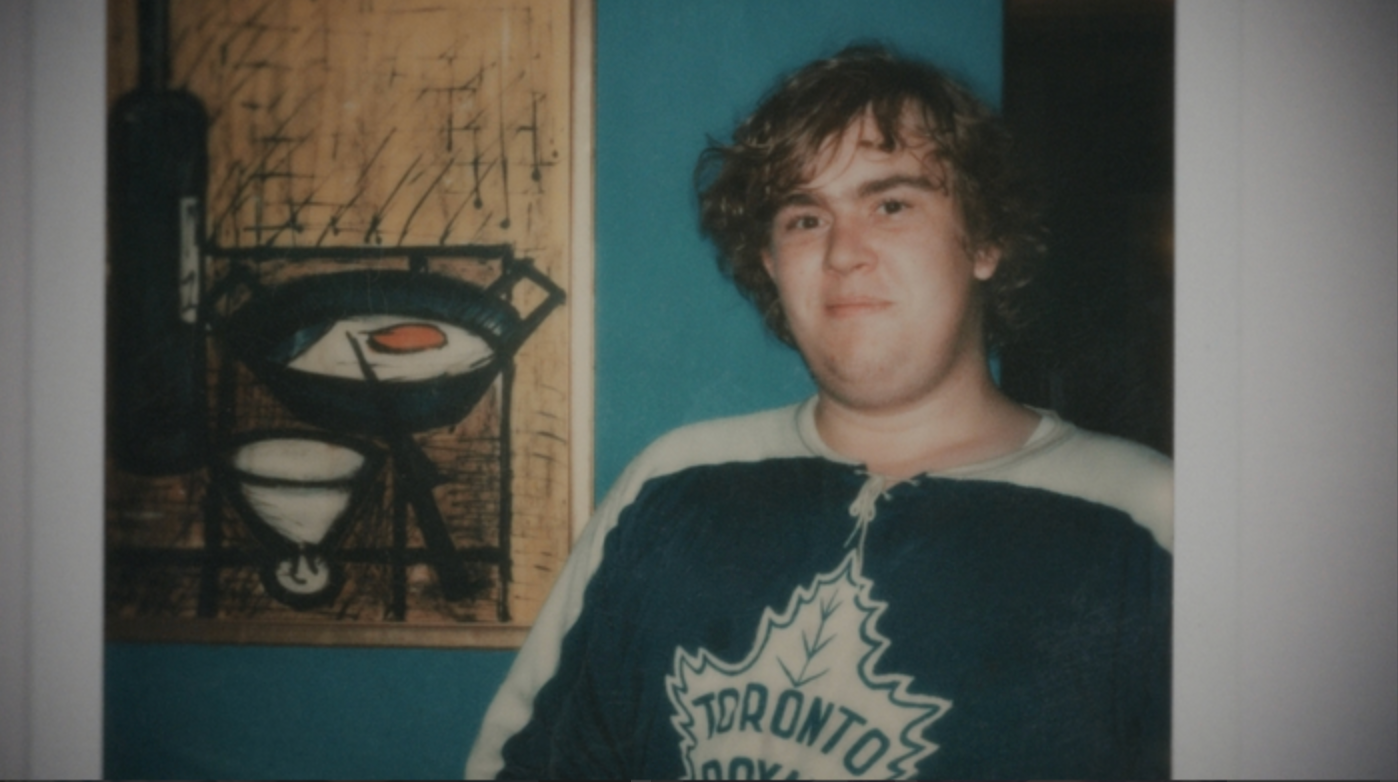
Decades after his death, John Candy remains untouchable. His films replay endlessly. His characters still feel familiar. Every year during the holidays, we get a glimpse of him in Home Alone and feel warm and fuzzy inside. In an era obsessed with irony and detachment, his sincerity has not become dated. It has only gained currency.
I Like Me, the new documentary co-produced by his children and directed by Colin Hanks, does not attempt to canonize him. Instead, it contextualizes why his warmth, generosity, and emotional accessibility now feel radical again.
I spoke with his son Chris Candy on legacy, vulnerability, and why character driven comedy is having a comeback.
Sinead McInerney: Greetings from Toronto ! You grew up between here and Los Angeles. When you think about where you feel most rooted, what comes up for you?
Chris Candy: I was born in Toronto in 1984, and then pretty quickly we were living in Brentwood in West Los Angeles. But between the ages of about two and eight, we were constantly going back and forth. Those years are where I remember my dad most clearly, just as a dad.
SM: Toronto still strongly claims him ! Do you feel that connection to “Johnny Toronto” when you’re here?
CC: Very much. There’s something about Toronto that feels like his energy. There’s humility. There’s humor. There’s very little ego.He also loved being part of everyday culture here. Sports, especially. He loved the Blue Jays. Being in the stands, being part of the crowd not separate from it. He loved that. He loved being just another guy in the stands. That was a very real joy for him.

SM: Growing up around someone so culturally recognizable, did his legacy feel big to you at the time, or did that come later?
CC: It definitely came later. When you’re a kid, it’s not a legacy. It’s just your parent. It wasn’t until my twenties that I really understood what he meant to people.Now, seeing younger audiences rediscover his work is surprising and moving. It feels like he never really left pop culture. He just keeps showing up for each new generation.

Photo Credit: Prime Video © Amazon Content Services LLC
SM: Your father, like you, lost his own father very young. Did you recognize that parallel for yourself early on?
CC: Not really. I didn’t make that connection until my early twenties. Once I did, it changed how I thought about health, responsibility, and legacy. It also helped explain why he was so influenced by other people’s fathers. Coaches, mentors, friends’ dads. Masculinity and guidance became something patch worked together. That’s how it showed up for me, too.
SM: There’s a moment in the film where it becomes clear the childhood loss of his father made him feel like he was living on borrowed time.
CC: Yes. That’s something he really carried. He worried constantly that if he stopped working, everything would disappear. That sense of urgency was always with him. And while some of that helped him create what he did, it also wore him down physically.

SM: He was so central to a whole creative ecosystem. Second City, SCTV, the character driven comedy lineage. How do you see that tradition today?
CC: Comedy always moves in cycles. People love to say comedy is dead or too restricted, but it’s just evolving. What feels exciting right now is the return to character. You see it with people like Tim Robinson or Bill Hader. Even darker work like Barry is rooted in behavior and emotional specificity. That all comes directly from Second City. My dad didn’t invent that approach, but he embodied it. He built entire films around characters like Uncle Buck or Dale Griffith. Even when his part wasn’t that big, he elevated it. People trusted him because they could feel him.
SM: Do you think audiences are craving that sincerity again?
CC: I do. There was a long moment where irony felt like armor. But sincerity lasts longer. My dad didn’t perform for people. He performed with them. He understood that comedy didn’t have to be cold or distant to be smart. I think people are responding to that again.
SM: The documentary does such a great job at showing that and how well he represented a kind of every man.
CC: That’s the thing. People responded so strongly to how accessible he was. There was no “I’m above you” energy. He treated everyone the same. The doorman, the studio head, the fan. That came from his life. He lost his father young. He carried responsibility early. That shapes how you move through the world.
SM: Was it important to avoid framing his habits as scandal. That feels like a conscious counter narrative to how celebrity documentaries are usually built.
CC: Very conscious. Alcohol or food were not the story. They were symptoms. He was never sloppy (around us). He was never chaotic. So the question became what was he soothing? When you follow that thread, you arrive at grief, guilt, responsibility, and pressure. We didn’t want a villain. We didn’t want a highlight reel, either. We wanted to show a human pattern. This is what happens when someone’s kindness runs faster than their capacity.
SM: If someone is discovering him for the first time through this documentary, what do you hope they notice most?
CC: The care. The effort. He always wanted to entertain people. That was the job to him. He wasn’t trying to be ironic or above it. He wanted you to laugh and feel something at the same time. And I think that combination is why it still works.
SM: Do you think he would have understood his place in pop culture today?
CC: I honestly think he would have been overwhelmed by it. He never thought of himself as iconic. He felt lucky to be there. And maybe that’s part of why it stuck. He never played larger than life. He played human.
SM: What do you hope audiences take from I Like Me beyond a new admiration for your father?
CC: Permission. Permission to rest. Permission to step back. Permission to not carry everything alone. My father didn’t believe he could pause. He thought people would forget him if he stopped. That belief still runs through creative culture. If the film does anything beyond honoring him, I hope it challenges that idea. You don’t have to disappear to take care of yourself. And you don’t have to harden to be funny.
I LIKE ME is available on Amazon Prime now!
Discover More