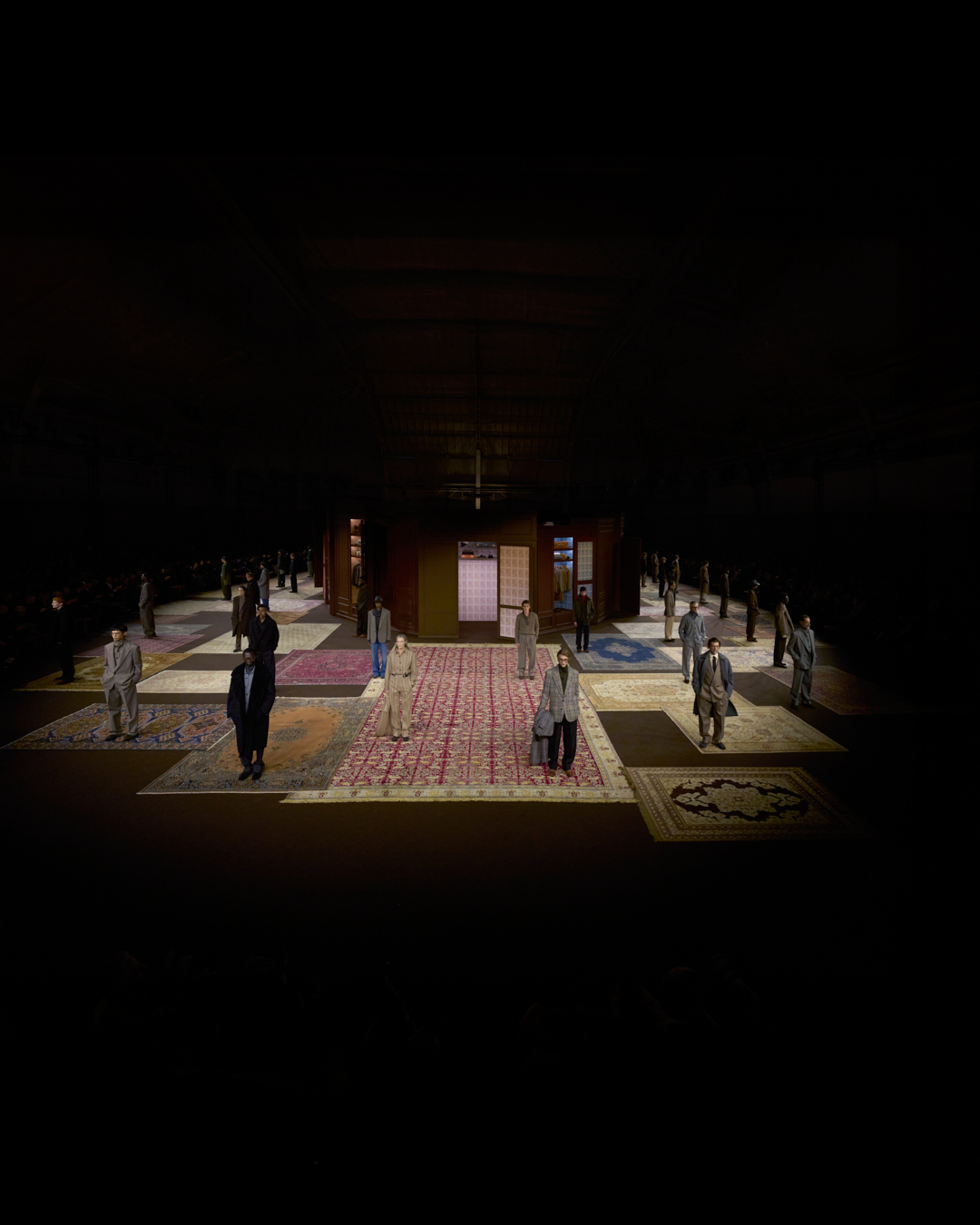
What does a man’s closet say about his identity? For Zegna, it can tell a story of a family’s lives as both morals and belongings are passed down from generation to generation. An imaginary closet is the grounding element of Zegna’s Fall/Winter 2026 collection, with models seemingly emerging from the closet to walk the runway during the brand’s presentation at Milan Fashion Week.
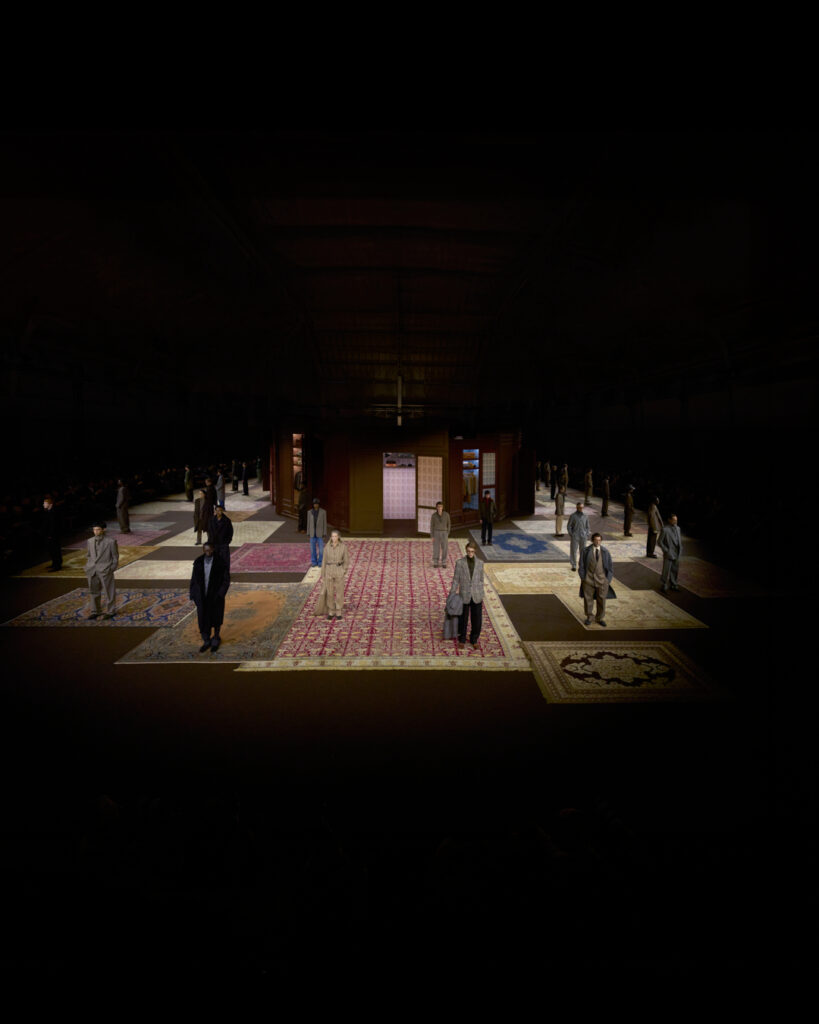
Each look takes from this closet that is directly connected to the Zegna family lineage — personal items and inherited clothes from ancestors are directly recreated to show the timeless nature of the Zegna family’s love for clothes. The lives lived by the first wearers of the Zegna name still hold just as much importance as they did nearly 100 years ago when the first Zegna suit was created for Count Ermenegildo Zegna.

Artistic Director, Alessandro Sartori, is still finding new ways of reinventing the Zegna legacy even after ten years at the helm of the brand.
“As our outer, chosen skin, clothes are the pages of a diary we write throughout our whole existence,” Sartori said in a press release. “In this collection, a generational passage of batons happens inside a family closet in which belongings are protected from neglect in order for other members of the family to use them. I am after the sense of wonder that happens when one finds a piece that was owned by one’s father, grandfather, uncle; the discovery that comes from studying other ways of dressing, which prompts a willingness to try something new; the silent dialogue that ensues between bodies and ways to carry oneself.”
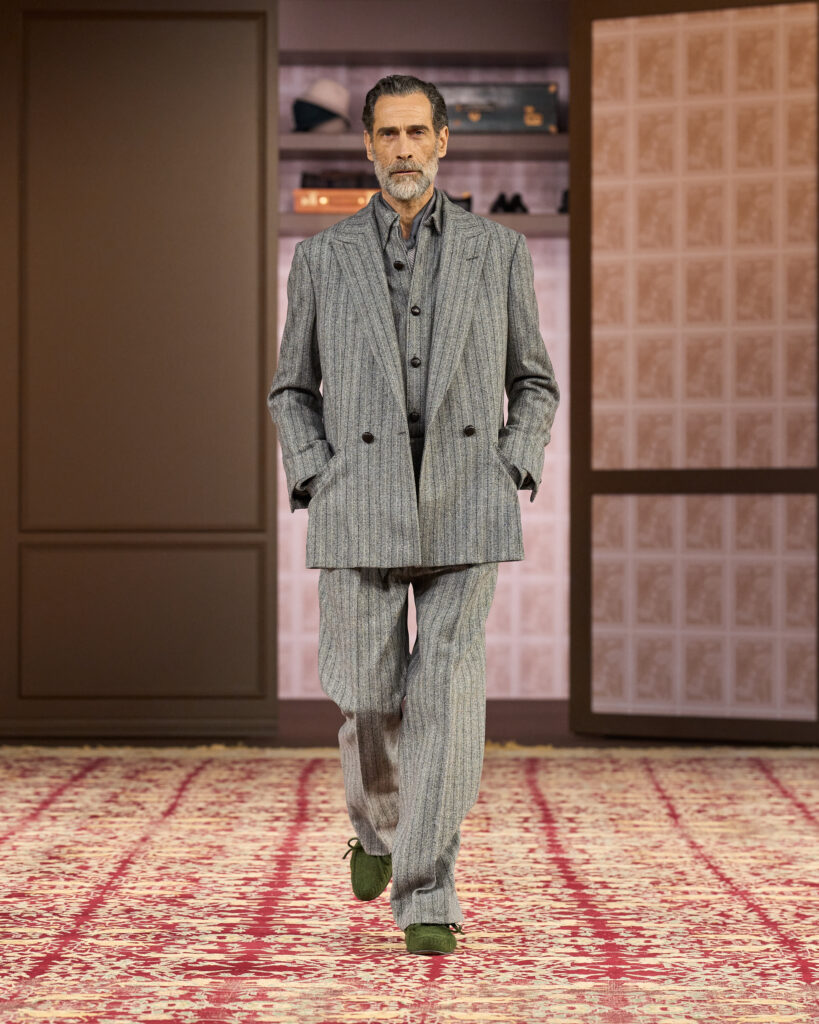
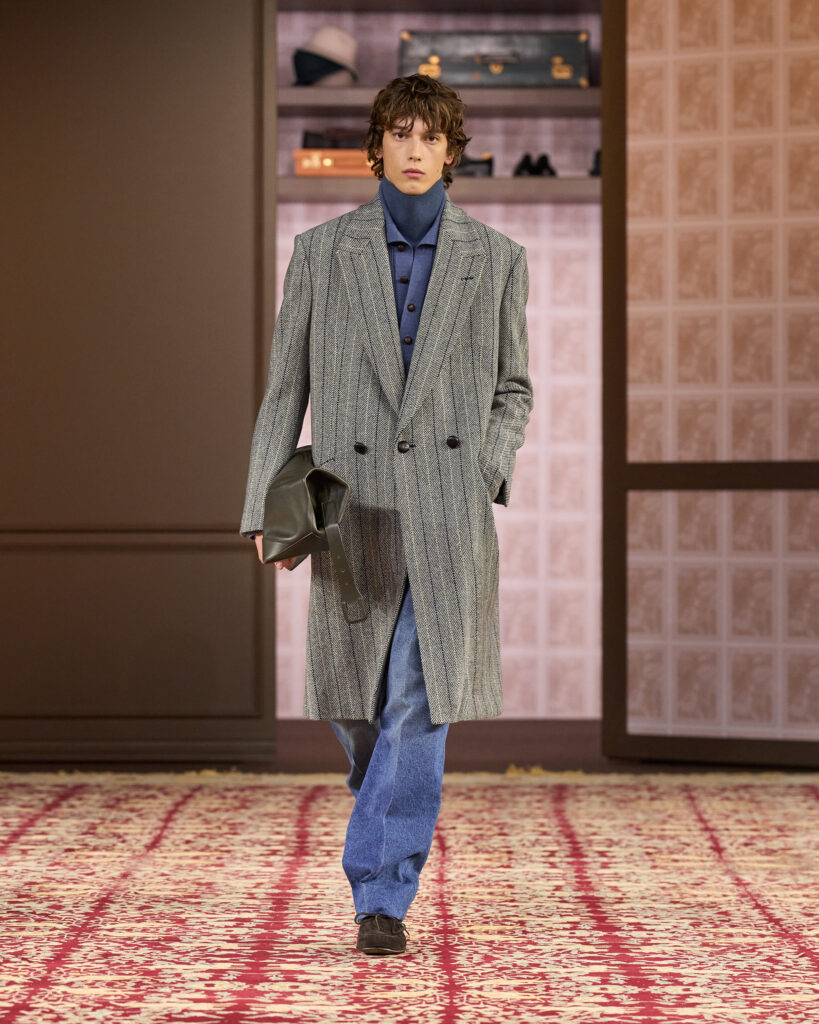
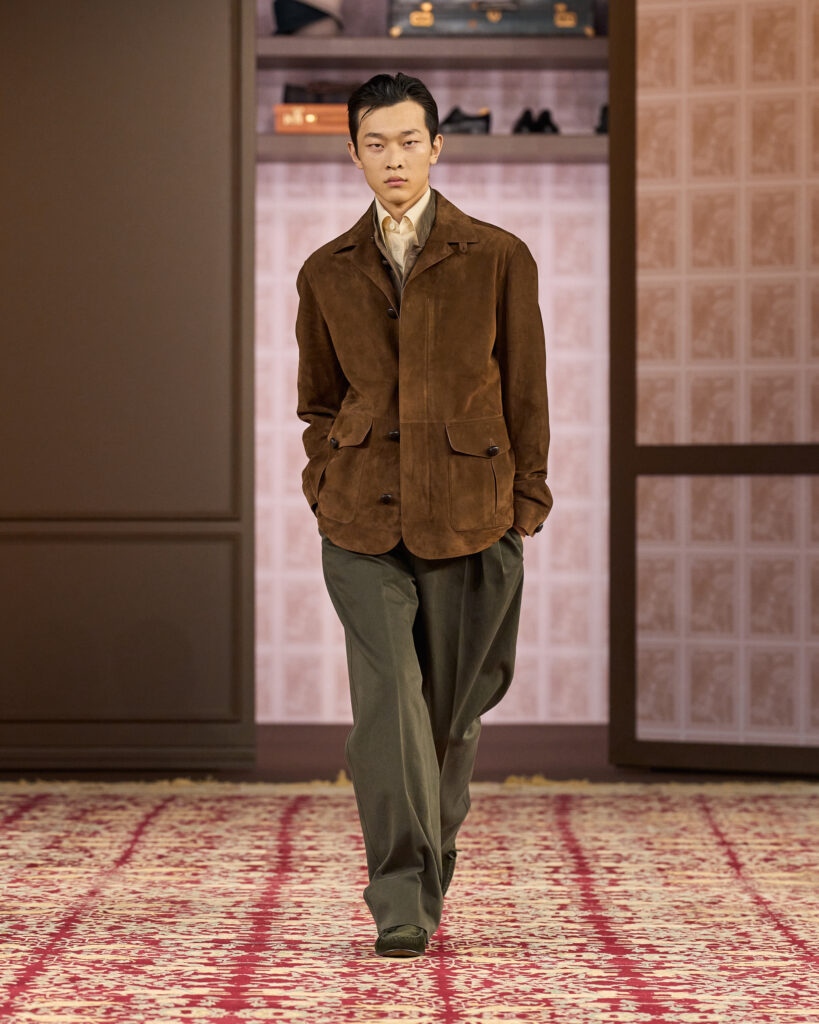
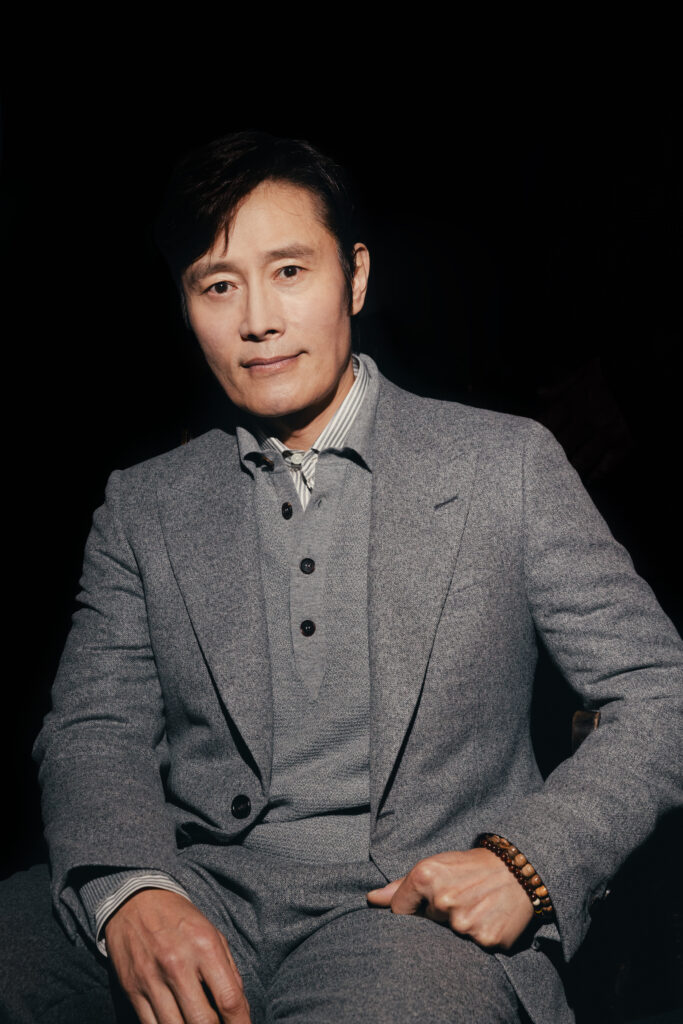
Though the variety of suits, sweaters, and slacks don’t venture far past Zegna’s typical muted color palette, textures and contrasting knits tell an interesting story and allow for more versatility of wear. Even the double-breasted jacket can evolve behind past its classic silhouette — a horizontal button allows for two different styles, one more closed-off and tailored and the other more loose and open. Additional layered collars also give a feeling of both nostalgia and the modern take on layering with built-in double collars. Celebrity guests like actor Lee Byung Hun modeled the newest take on the Zegna legacy while sitting front row of the presentation.

Leather is the main accent fabric of the collection, and as for accessories many looks came down the runway studded with casual footwear, sharply square eyewear, and almost relaxed briefcases and duffel bags.

Ultimately, the wool suit that forged Zegna’s legacy forward in the 1930s still feels present today as textiles are the main event within this collection. Whether its tweed, flannel, cashmere, or silk, wool is present as a main component of the textile. It goes to show how flexible the generational closet can be in still creating a cohesive yet interesting collection of 56 looks.
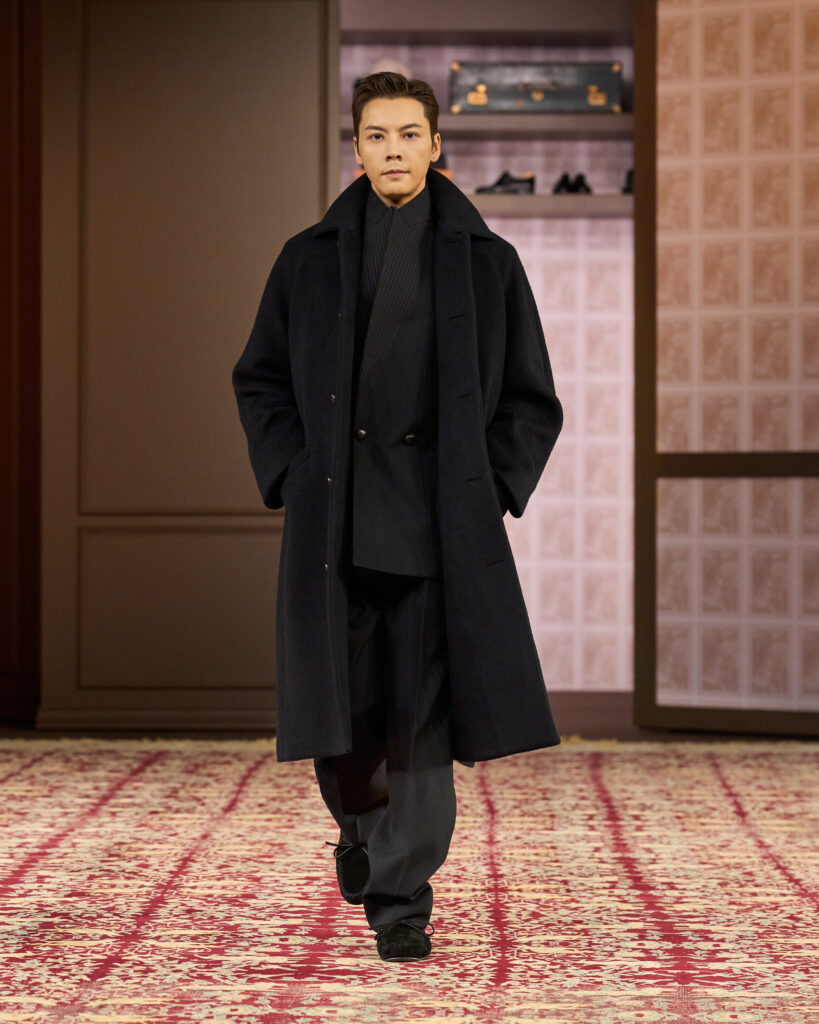
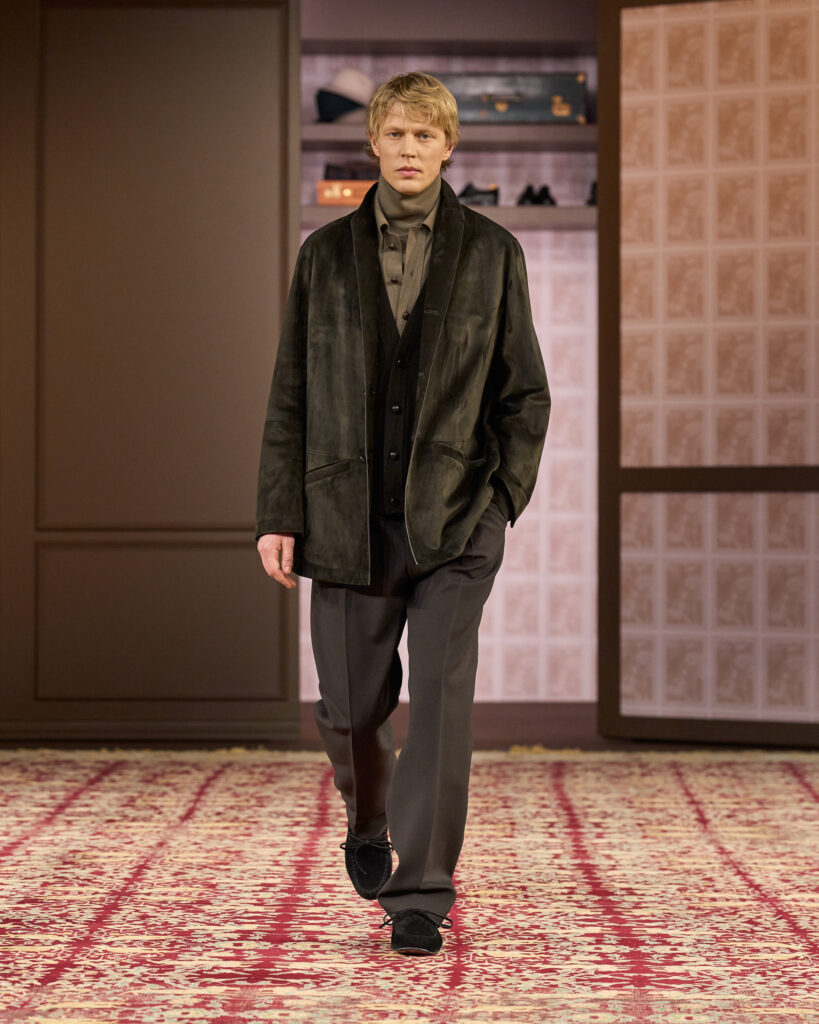
“We take deep pride and make a lot of effort in doing what we do, so the idea of creating something that can be kept, reused and reinterpreted for a long time energizes us,” Sartori said. “The iconic Trofeo wool, born in 1965, is central to this collection, testifying to ZEGNA’s enduring commitment to excellence — a fabric which, by being reinterpreted to be something of today, prompts, again, an encounter of generations. Everything at ZEGNA starts from fabric; in this wardrobe, that foundation is combined with an intense process of testing, styling, wearing and improving garments and silhouettes, worked one-to-one on each model, time after time.”
Discover More